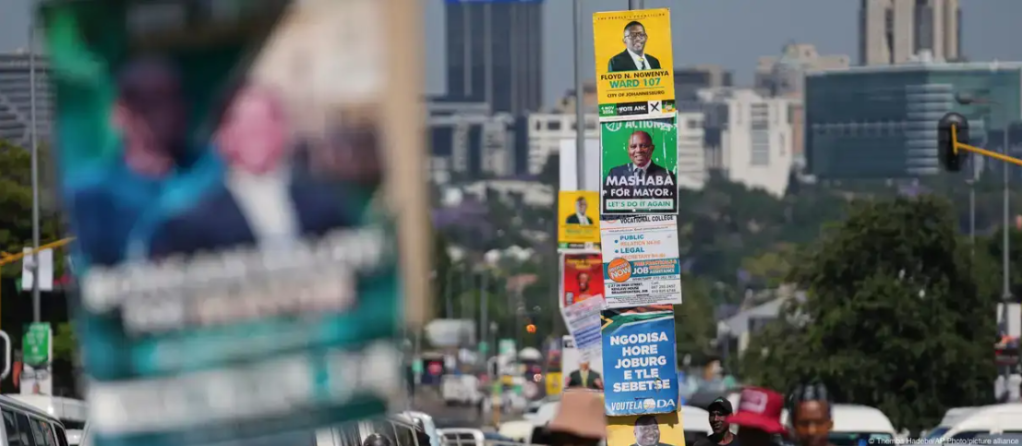
“At the risk of seeming ridiculous, let me say that the true revolutionary is guided by a great feeling of love. It is impossible to think of a genuine revolutionary lacking this quality” – Ernesto “Che” Guevara.
In exploring the psychological determinants of electoral behaviour, including character, memory, emotions and identity, it becomes important to understand not only why voters turn out to vote, but also why they choose particular political parties.
What elections mean to citizens, what happens in the minds of voters when they enter the polling booth, and the experiences that shape their electoral decisions can be understood through the concept of electoral ergonomics.
This refers to the ways in which the various dimensions of the electoral environment and political engagement influence voters’ experiences, participation, decisions and, ultimately, their relationship with political organisations. It encompasses not only the mechanics of voting but also the psychological, emotional, social and relational factors that shape electoral behaviour.
Against this background, could arrogance, rudeness, pomposity, hostility, unapproachability and an inability to relate to ordinary people be among the factors contributing to declining voter turnout and the electoral fortunes of left-leaning political organisations, as reflected in the 2026 local government electoral landscape?
This question is particularly relevant when considering the electoral difficulties confronting the former liberation movement and other organisations on the left, including those that have participated in local government elections for the first time.
There is a troubling contradiction in the conduct of some leaders within so-called progressive political parties and left-wing organisations. They speak passionately about the working class, the poor, marginalised communities and the struggle for social justice, yet some demonstrate remarkably little humility, Ubuntu or genuine regard for the very people they claim to represent.
This contradiction is not merely a matter of individual personality. It has organisational consequences. Such attitudes become embedded in organisational culture, filter through political structures and government institutions, and ultimately shape the relationship between political movements and the communities they seek to serve.
As discussions continue around uniting the left and reclaiming electoral support, particularly within African communities, perhaps the conversation needs to extend beyond organisational restructuring, systems, policies, ideological alignment and electoral strategies.
It must also confront a frequently overlooked but equally important question: What kind of political character, leadership disposition and interpersonal values are necessary to rebuild public trust and reconnect political organisations with ordinary people?
You cannot mobilise people whose dignity you disregard. You cannot ask for the support of communities you treat with contempt. And you cannot credibly claim to represent the working class while conducting yourself as though ordinary people are beneath you.
Political leadership is not corporate executive management. A public representative is not a corporate executive entitled to retreat behind an office, an assistant or an institutional hierarchy.
Public leadership demands visibility, accessibility, humility and meaningful engagement. The ability to interact respectfully with people from all walks of life is not an optional personality trait; it is an essential responsibility of public office. Indeed, the more disadvantaged the communities one represents, the greater the responsibility to demonstrate empathy, accessibility and an appreciation of their lived realities.
Leadership Character as a Determinant of Organisational Culture
Leadership character has significant implications for organisational culture, particularly within public institutions. Organisational culture is not developed independently of those who occupy positions of authority. Leaders shape it through their decisions, priorities, communication styles, conduct, tolerance of particular behaviours and the examples they set through everyday interactions.
Leadership character therefore extends beyond personality traits. It influences the ethical foundations, behavioural expectations and institutional values that determine how an organisation functions.
This relationship becomes particularly important in public service, where the conduct of leadership ultimately influences the quality of citizens’ experiences when interacting with government institutions.
Consider the everyday experiences of ordinary South Africans: nurses displaying unbecoming attitudes towards patients in hospitals and clinics; police officials demonstrating little sympathy towards victims seeking assistance; rude and dismissive clerks at the South African Social Security Agency (SASSA); municipal departments failing to collect solid waste on schedule; officials not being dispatched timeously to address damaged electricity and water infrastructure; and councillors, members of mayoral committees, mayors, municipal officials and ward committee representatives who remain inaccessible to the communities they serve.
Consider, too, the frustration of communities whose inputs during Integrated Development Plan (IDP) consultations and engagements on the Service Delivery and Budget Implementation Plan (SDBIP) appear to be ignored, with little feedback or accountability from those entrusted with implementing their priorities.
ALSO READ: Ingonyama Trust: who guards the land, and from whom?
These are not simply isolated service delivery failures. They raise deeper questions about institutional responsiveness, organisational culture, accountability and the values that inform public administration. Citizens experience government not only through policies, budgets and service delivery statistics but also through the everyday conduct of the individuals who represent and administer the state.
The Political Executive as an Example of Institutional Behaviour
South Africa has witnessed incidents of politicians engaging in screaming matches with residents, swearing at community members and displaying open contempt towards those seeking assistance.
There have been instances of politicians being captured on camera making remarks to the effect that, ‘’we eat these chicken feet because we want their votes”. Others have responded arrogantly to residents requesting assistance with basic household needs, employment or other forms of support. There have also been instances of politicians dismissively referring to adult men as boys simply because they disagree with them politically.
These behaviours reflect an absence of decorum, etiquette, diplomacy, emotional intelligence and situational awareness. More importantly, they reveal a troubling disconnect between the political leadership and the very communities from which its legitimacy is derived.
The consequences may extend well beyond the individual politician involved. Political executives establish behavioural expectations, whether intentionally or otherwise. When arrogance, disrespect and hostility are tolerated or normalised at the political leadership level, they can become embedded in the broader institutional environment.
The attitudes displayed by political executives can influence the conduct of senior management, middle management and frontline officials, all the way down to the security official at the entrance of a municipal building.
Consider an ordinary resident queuing to renew a vehicle licence at municipal premises, only to be ignored, treated dismissively or aggressively addressed by a security official. Although this interaction may appear insignificant within the broader institutional arrangement, it contributes to the citizen’s perception of government and its elected leaders. It reinforces the experience of an institution that is inaccessible, indifferent and unresponsive.
This is how institutional culture is experienced: not merely through organisational policies and values statements, but through everyday interactions between public institutions and the people they are supposed to serve.
Leadership character, therefore, is not a soft or peripheral consideration. It is central to organisational culture. It helps establish the unwritten rules governing acceptable behaviour and influences whether an institution develops a culture of accountability, responsiveness, empathy and service excellence (‘Bathu – Pele’) or one characterised by arrogance, indifference and institutional hostility.
The Missing Variable in the Electoral Decline of the Left
If these institutional and interpersonal experiences are considered alongside electoral behaviour, an important question emerges: could the character and demeanour of political leadership be contributing to the electoral decline of left-leaning organisations?
Electoral support is not sustained exclusively through ideological alignment, political manifestos, policy propositions or historical loyalty. It is also shaped by citizens’ experiences with political representatives, their perceptions of leadership credibility, the emotional connections they establish with political movements and the extent to which they feel respected, acknowledged and represented.
For communities that have historically supported liberation and progressive movements, political identification may be rooted in historical memory, collective struggle, class solidarity and expectations of social transformation. However, historical loyalty is not necessarily permanent.
When the lived experiences of citizens become increasingly disconnected from the values and promises articulated by political leaders, political identification can weaken.
A community may agree with a party’s ideological position on economic redistribution, public ownership, workers’ rights and social justice, yet become increasingly disillusioned with the personalities representing those principles.
The contradiction between what a political organisation advocates and how its leaders conduct themselves can progressively erode its credibility.
ALSO READ: TJR 100 Creators: Phelelani Mkhize
This is particularly important in African communities, where Ubuntu, respect, humility, solidarity and reciprocal social responsibility remain important dimensions of social relationships.
Political organisations that invoke these values in their ideological and political rhetoric but fail to demonstrate them in their everyday conduct risk creating a credibility and moral deficit.
The problem becomes even more pronounced when political leaders arrive in poor communities in expensive German-manufactured vehicles, dressed in Italian designer clothing, displaying an unmistakable sense of social and economic superiority, while simultaneously claiming to identify with the material conditions of the working class and the poor.
There is nothing inherently wrong with personal success, expensive vehicles or designer clothing. The problem is not wealth itself, but the performance of solidarity without the corresponding empathy, accessibility and social connection.
The issue is the contradiction between the image of political solidarity being projected and the interpersonal disposition being demonstrated. Political representation requires more than physically appearing in poor communities during election campaigns. It requires the ability to relate to people, understand their circumstances, listen to their grievances and engage them without an attitude of superiority.
The inability to establish this connection may communicate something far more damaging than a poorly articulated manifesto or an unsuccessful electoral campaign: that the political leadership has become socially and emotionally detached from the people it claims to represent. Especially in South Africa where the electorate tends to vote for a person and not necessarily a policy.
Recalibrating the Left: Beyond Coalitions and Ideological Alignment
There is currently increasing discussion about recalibrating the left, consolidating progressive forces and strengthening black political organisations, initially through municipal coalition arrangements and, in the longer term, potentially through a Council of the Left.
These discussions are necessary. Organisational fragmentation, ideological differences, competing political interests and the absence of a coherent programme for economic and social transformation deserve serious consideration.
However, amid the ongoing horse-trading, ideological assessments, negotiations around political compatibility and discussions about value alignment, remarkably little attention appears to be directed towards the character of political leadership itself.
What kind of leaders are these organisations seeking to consolidate around? What values should inform their conduct? How accessible are they to ordinary people? Can they engage respectfully with communities that disagree with them? Do they possess the humility, emotional intelligence and social awareness necessary to represent people whose material circumstances may be vastly different from their own?
These questions should be central to any serious attempt to rebuild the political fortunes of the left.
Perhaps one of the least examined variables in understanding the electoral decline of progressive political organisations is the gradual erosion of the relationship between their leadership and their traditional constituencies.
Political organisations may spend considerable time analysing voting patterns, electoral geography, coalition arithmetic, organisational structures and ideological positioning while overlooking the interpersonal experiences that shape how citizens perceive them.
The argument is not that leadership arrogance, poor interpersonal conduct or a lack of Ubuntu independently explain electoral decline or voter apathy. Electoral behaviour is influenced by multiple structural, economic, political and psychological factors. However, leadership character deserves to be treated as a potentially significant explanatory variable rather than dismissed as an issue of personality or political etiquette.
If you cannot tolerate ordinary people, engage them respectfully, listen to their grievances or relate to their lived realities, perhaps public-facing political leadership is not where you belong.
Serve in the back office if you must, but do not expect communities to continue entrusting their political future to leaders who cannot bring themselves to respect them.
Ultimately, the left may not only have an ideological, organisational and electoral crisis; it may also have a leadership character crisis.
Reclaiming electoral support will require more than new coalitions, revised political programmes, ideological realignment or organisational restructuring. It will require a fundamental reconsideration of the relationship between political leadership and the people in whose name political power is exercised.
Perhaps the question that progressive organisations should be asking themselves is not only how to win back the working class and poor communities, but also whether their current leadership has retained the humility, empathy, accessibility and Ubuntu necessary to deserve their support.
You cannot claim to lead a people you have become too arrogant to relate to. And you cannot reclaim the confidence of the working class without first reclaiming the ability to respect it. “You can’t lead the people if you don’t love the people” – Cornel West




Leave a Reply