A week that exposed the question nobody is asking
On Wednesday 30 September, the Ingonyama Trust Board’s Rural Economy Development and Investment Indaba at the Durban ICC was brought to a halt when regiments entered the hall.
According to reports, they objected that the King, who is the sole trustee and chairperson, was not part of the gathering. They withdrew after amakhosi loyal to the King intervened.
The King had objected to the indaba beforehand. The Board defended it as an effort to draw investment into rural communities. Whatever one thinks of the conduct inside the hall, the episode is the latest in a long contest between the King, the Minister and the Board over who controls the Trust.
That contest has had a familiar cast. This year the Minister dissolved the Board and the High Court held that decision unlawful. The King is now lobbying Parliament for an amendment that would let him appoint the Board. Each of them speaks in the name of the people who live on the land.
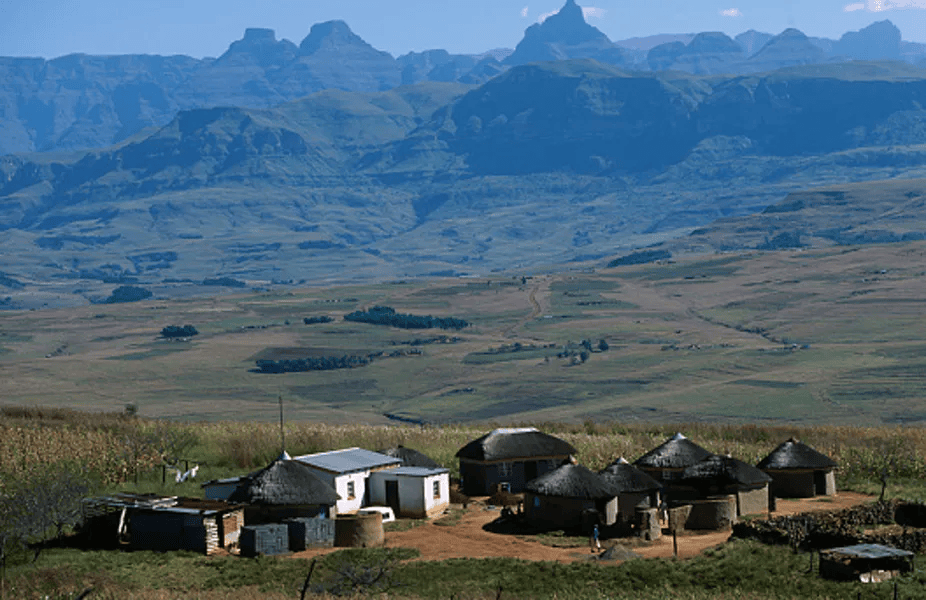
Those people, more than five million of them on about 2.8 million hectares, are almost never asked what they want. The week made me look again at a question that sits underneath the fight: what kind of security should a resident of Trust land have, and what is the land to us in the first place?
What the Trust is, and what it is not
The Trust was created in April 1994, days before our first democratic election, as part of the settlement that brought the IFP into that election. Its land is held by the King as sole trustee, for the benefit of the communities who live on it, and administered by a Board.
It is a trust in name. In practice residents are not beneficiaries with enforceable rights, a voice in governance or a clear account of what is done with the income. Their rights are, at best, customary and informal.
In 2021 the High Court found that the Trust and its Board acted unlawfully by imposing residential leases on people who were already the beneficial owners of their land under Zulu customary law. That finding matters for what follows. It shows that the land can be threatened from within as well as from outside.
What the land is to our people
I will state my position first. Land in this part of the country is not a commodity, and it should not be turned into one. That conviction rests on what the land is, before it rests on any argument about credit.
The land is where our ancestors lie. Family graves sit on homesteads and in nearby ground, and the dead are not abandoned when the living move on. A family that loses its land loses access to those who came before it, and with them the place where it speaks to its ancestors. No price compensates for that.
The land is identity and belonging. A person is known by clan and by the place the clan has long occupied. To say where you are from is to say who you are. The right to occupy and to be buried in that place is part of what makes a person a member of a community and not a stranger.
The land is also an economy, and one that does not appear in the market statistics. It carries the fields that feed a household, the grazing that supports cattle, and the commons from which people gather water, firewood, thatching grass and medicinal plants. Cattle remain wealth, a means of paying lobola and a part of ritual life. None of this needs a bank to function.
The land is social security. Millions of South Africans work in the cities on insecure terms. When a job ends, a contract is not renewed, or old age arrives without enough pension, the family goes home. Home is a plot where nobody can be evicted for arrears, where a room can be built, where food can be grown and where a returning relative is received. For many families it is the only safety net they have.
The land is inheritance. It belongs to the dead, the living and those still to be born, and no generation has the right to spend it. That is why the practice of holding it collectively, with chiefs allocating and not selling, has endured. Treating it as an asset that one owner can pledge and lose reverses that logic.
History gives the point its edge. The Natives Land Act of 1913 confined the African majority to a small fraction of the country. Forced removals under apartheid cleared people from land they had occupied for generations. A people who have been dispossessed by law have good reason to be wary of any new legal mechanism, however well meant, through which land can again be lost.
The case against deeds
It follows that I welcome, and do not regret, the fact that Trust land cannot be mortgaged. The inability to put a home up as collateral is not a defect to be cured. It is a barrier that keeps the land from passing to banks and to big capital.
Consider how dispossession usually works once land becomes available to be pledged. A family borrows in a bad year, whether for a funeral, an illness or a failed business. A loan goes into default. The home is sold. The buyer is rarely a neighbour. Over time parcels are accumulated by those with the money to wait, and a community is converted into a collection of tenants and sellers.
Credit is also not a cure for poverty. A household with no regular income that borrows against its only asset is more likely to lose that asset than to build wealth from it. The Trust’s own leadership has warned in the past that title deeds would be pledged to loan sharks. The warning is not fanciful.
In a country where ownership has tracked race and power, land that stays out of the market is rare and worth defending. The question is not whether residents should be allowed to borrow. It is whether we should risk the single thing that has survived dispossession in order to give them that option.
The case for secure individual rights
The opposing view deserves to be put at full strength, because it is held by serious people and has real weight.
It starts with section 25(6) of the Constitution, which entitles people whose tenure is legally insecure because of past discriminatory laws to secure tenure or comparable redress. The word is security. On this view the present arrangement does not provide it. A resident holds a right that depends on the goodwill of an institution, and that institution can change the terms, as the lease episode showed.
Those who hold this view make three arguments.
- A bar on mortgages is not protection. It stops a resident from pledging a home, but it does not stop the trustee or the Board from leasing the land to a mining company or a telecommunications provider. It removes one threat and leaves the larger one in place.
- Poverty does not wait for the law. Where formal credit is unavailable, informal credit fills the gap, often at ruinous rates. A person who cannot borrow against the one asset they have is not thereby safe.
- Choice is a form of dignity. Residents elsewhere decide for themselves whether to borrow against their homes. Telling rural residents that they may not, for their own good, is paternalism with a long history in this country.
Nor, they say, does security need to mean exposure to the market. Rights can be registered and ring-fenced, by restrictions on sale outside the community, by pre emption rights for the community, by limits on foreclosure of a family home, and by protections enforceable against the trustee itself.
Where the two views meet, and where they part
Both views reject the idea that the land should drift into the hands of banks or big capital. The disagreement is narrower than it first appears. It turns on a single question: who is the land being protected from, and who is trusted to do the protecting?
My view carries a condition that I should state plainly. Keeping the land out of the market protects it only if the custodian is itself kept from handing it to the market. A trustee who is also chair, a Board appointed by a Minister, reserves that are poorly reported and leases imposed on residents are not a reassuring record. The case for collective land depends on the collective actually holding the power.
The opposing view must meet a condition of its own. Any scheme of individual rights has to show how it will prevent the dispossession by debt that history warns of. Ring fencing sounds persuasive on paper. It has to survive pressure from lenders, from investors and from desperate households.
There is also a cost to be counted on my side. Land held outside the market cannot be borrowed against, and that may leave a family unable to fund a business or a child’s education. The question is whether that cost justifies the protection, and whether it should fall on the poorest.
A question for the country, not only for the courts
Land and ownership remain the unfinished business of our democracy. We are still deciding whether the answer to dispossession is individual title, communal custody, state ownership or some combination. The Ingonyama Trust sits at the point where all of these meet.
The fight now playing out between the King and the Board is about who sits on the Board. It is not yet about what the land is for or whom the Board answers to. If the next amendment to the Ingonyama Trust Act is about appointments alone, it will have settled who holds the power and left untouched how that power answers to the people on the land.
I do not claim to have settled the argument. Reasonable people, including those who agree on the end, disagree on the means. What I do say is that the five million people on the land should be at the table when it is settled.
Is the greater danger to these communities a bank, or the body that holds their land in trust? And can the second be fixed in a way that makes the first less likely? That is a discussion for all of us.
Trevor Tshabalala is Director of Vana Tshabalala Attorneys.





Leave a comment