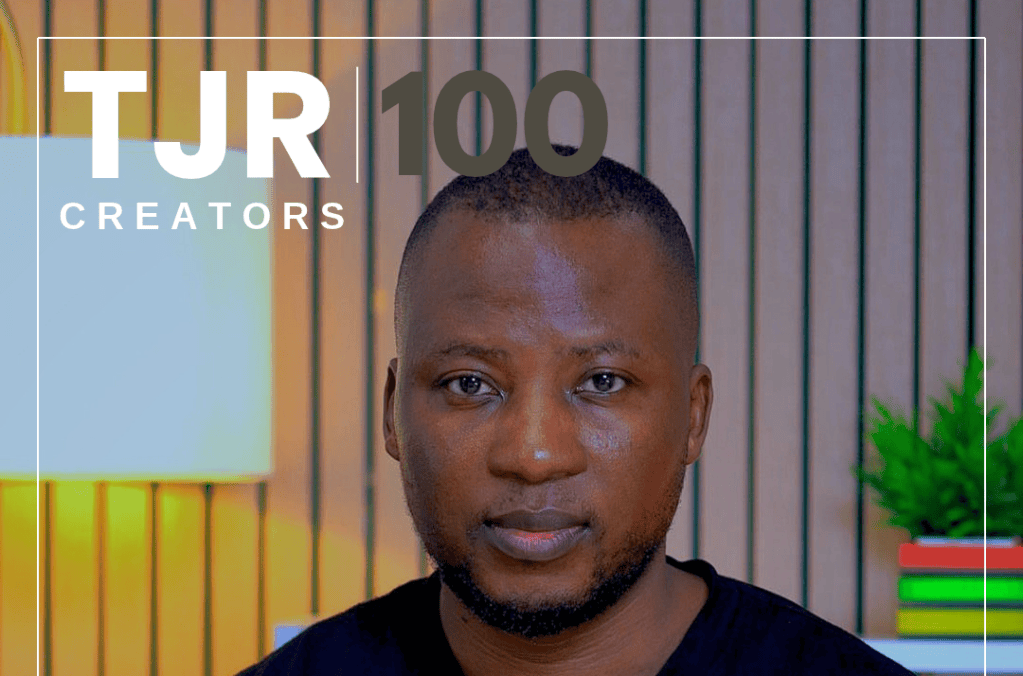
“I went from fixing people’s computers and cellphones just to survive, to building a content creation business that has enabled me to buy two cars and a property.”
Content creation For Gift “Lachief” Ndou, has been more than a career change; it has been a life-changing journey.
It began as a way to make ends meet through repairing computers and cellphones and over the years evolved into a successful digital career making him the biggest tech content creator in South Africa.
Today, with an audience of millions, partnerships with more than 100 brands and collaborations with global technology giants such as HUAWEI and Samsung, Lachief has turned his curiosity into a business.
But behind the polished tech videos and growing digital footprint is a father and husband who remains intentional about his craft, protective of his private life and committed to making technology accessible to everyday consumers.
We caught up with him for TJR 100 Creators to talk about the business of content creation, the responsibility that comes with influencing purchasing decisions, and building a legacy that extends beyond social media.
Give us a brief background of your journey. Where did your interest in technology begin, and how did that eventually translate into content creation?
My passion for technology started when I was very young, around the age of seven. I was that kid who loved taking things apart, even when they weren’t broken.
I remember opening perfectly working televisions, DVD players and radios simply because I was curious about what was happening inside them. Sometimes I would take apart a working radio, remove its components and try to fit them into a DIY box I had built myself. And when I managed to get something working, I would proudly call myself a genius! Looking back, it’s funny, but that’s where my curiosity and love for technology really began.
As I grew older, that curiosity turned into a skill. I started repairing people’s computers and cellphones to make a living. I wasn’t earning much, but it was something I knew how to do, and it helped me survive.
I spent years fixing devices, troubleshooting problems and helping people who didn’t necessarily understand technology. At the time, I was simply trying to make ends meet, not knowing that those experiences were preparing me for something much bigger.
Eventually, I had a realization. I’d spent years fixing the same problems for different people, and I started asking myself, why not share this knowledge online so that people could learn how to solve some of these problems themselves?
That’s how my content creation journey began. I started sharing simple smartphone and computer tips and tricks, showing people things they probably didn’t even know their devices could do.
What fascinated me was how something so simple could help so many people. The knowledge I had gained through years of repairing devices was now reaching people I’d never even met.
As my audience grew, so did the opportunities. What started as a way to survive eventually opened doors to working with some of the biggest technology brands in the world.
Looking back, I’m grateful for those early days because they taught me something important: you don’t always realise the value of what you know until you start sharing it.
I went from being a seven-year-old who took apart working radios and called himself a genius, to fixing phones and computers to survive, to teaching millions of people about technology. And for me, that’s what makes this journey special.
Who is Gift ‘Lachief’ Ndou at his core when the cameras are off and the microphones are muted?
When the cameras are off, I’m actually a very simple person. I’m a husband and a proud father of two boys, and family is a very important part of my life.
People mostly know me as someone who talks about technology, but when I’m not creating content, you’ll probably find me spending time with my family or playing games with my kids.
Those moments mean a lot to me because they remind me that there’s more to life than work, social media and chasing the next big opportunity.
I’m also naturally curious. Even when I’m not working, my mind is constantly exploring new ideas, learning new things and thinking about how I can improve myself or build something meaningful.
I think one thing people might not realise is that I’m quite a private person. I enjoy my own space, and I don’t necessarily feel the need to share everything about my life online.
Coming from a background where I had to work just to survive also taught me to appreciate the things I have today.
At my core, I’m still that curious kid who loved figuring out how things worked. The only difference is that today I have a family, a business and bigger responsibilities.
When the cameras are off, I’m not Lachief the content creator. I’m simply Gift, a husband, a father and someone who enjoys the little things in life.
Your content across social media is distinctive, polished and centred around technology. What goes into developing your content strategy?
My content strategy starts with one simple question: What value is someone going to get from watching this video?
I don’t believe technology content should only appeal to people who already understand technology. My goal has always been to make it simple enough for anyone to understand.
Before creating a video, I research the topic, explore the product or feature, and think about how I can explain it in the simplest and most engaging way possible.
I also pay close attention to audience behaviour. I look at the questions people ask, the problems they experience and the type of content they engage with.
One thing I’ve learned is that the first few seconds of a video are extremely important. You can have the most useful information in the world, but if you don’t capture someone’s attention, they might never get to hear it.
That’s why I put a lot of effort into storytelling, curiosity and making every second count.
Artificial intelligence has also become part of my creative workflow. I use AI tools to assist with research, brainstorming, content planning and building systems that make my work more efficient. But I still believe the human element is what makes content relatable.
For me, technology should make our lives easier, and I try to apply that same principle to how I create content.
My goal isn’t just to make people watch technology. It’s to help them understand it.
Much of your YouTube content is delivered through Shorts. Is this a strategic decision based on audience behaviour and consumption patterns, or simply the format that works best for you?
It’s definitely a strategic decision, but it’s also part of a bigger plan I have for my YouTube channel.
Right now, I’m intentionally focusing on short-form content because I want to understand what works best on YouTube Shorts, how the audience responds and what type of technology content performs well on the platform.
I’ve already gained valuable experience creating short-form content on platforms like TikTok and Instagram, so I’m applying some of those lessons to YouTube while learning how its audience behaves differently.
My goal is to experiment, analyse the results and eventually crack the code of what makes short-form content successful on YouTube.
Once I feel I’ve figured that out and established a strong foundation, I plan to transition into long-form content as well.
I believe long-form videos will give me an opportunity to explore technology in greater detail, whether that’s comprehensive product reviews, tutorials or deeper conversations about emerging technology.
For now, I’m treating YouTube Shorts as an opportunity to learn, grow and build an audience before expanding further.
I’m not avoiding long-form content. I’m simply taking a strategic approach. I want to understand the platform, master what I’m currently doing and then build from there.
You’ve managed to keep much of your personal life private, with your public profile largely centred around your work. Is that a deliberate decision, and how important are boundaries between your personal and professional life?
Yes, it’s a very deliberate decision.
I’ve always believed that being a public figure doesn’t necessarily mean every aspect of your life needs to be public.
I’m a husband and a father, and I value the time I spend with my family. Those are parts of my life that I prefer to protect.
People follow me primarily because of my technology content, and that’s where I prefer to keep the focus.
I think social media has created this expectation that content creators should constantly share everything happening in their lives. But personally, I don’t believe that should be a requirement.
There are moments I want to enjoy without thinking about recording them or sharing them online.
For example, when I’m playing games with my kids or spending time with my family, I want to be fully present in those moments.
Having boundaries also helps me maintain a healthy balance between my work and personal life.
For me, privacy isn’t about hiding anything. It’s about understanding that not everything valuable in your life needs to be shared with the world.
As a tech creator, your audience relies on your opinions and recommendations when making purchasing decisions. Have you ever found yourself in a position where a brand’s product didn’t quite live up to the claims or messaging they wanted you to communicate? How did you navigate that situation?
One thing I take very seriously is the trust my audience places in me.
When someone watches my content and decides to spend their hard-earned money on a product based on something I’ve shared, I understand the responsibility that comes with that.
Technology products don’t always perform exactly as marketing materials suggest, and I believe it’s important for creators to understand the difference between what a product promises and what it actually delivers.
My approach is to experience and understand a product before communicating its features.
If something doesn’t perform as expected, I believe the right approach is to communicate that honestly with the brand rather than make claims I cannot confidently support.
I also think it’s important to remember that a paid partnership doesn’t mean abandoning your judgement.
Brands have their marketing objectives, but as a creator, I also have a responsibility to the people who trust my content.
For me, credibility is something that takes years to build and can be lost very quickly.
A brand partnership might last a few weeks, but the trust of your audience is something you need to protect for years.
Content creation is often presented as an exciting career, but there is also a business behind it. What would you say are some of the biggest advantages and disadvantages of being a full-time content creator?
One of the biggest advantages is having the opportunity to turn something you’re genuinely passionate about into a career.
When I started repairing phones and computers, I was doing it to survive. I never imagined that the same passion would one day allow me to build a business, work with international brands and achieve some of my personal financial goals.
Through content creation, I’ve managed to buy two cars and a property. For me, those are meaningful milestones because I know where I started and how much work it took to get here.
I’ve also had the privilege of collaborating with over 100 international AI brands, alongside leading technology, telecommunications, financial services and retail companies.
Some of the brands I’ve worked with include HUAWEI, Samsung, Vivo, TECNO, Vodacom, MTN, rain, African Bank, FNB, GoTyme Bank, Makro, Meta, Microsoft, Reddit, TikTok, Xero, Higgsfield, Anker, Skyworth, TCL, Amazon, Takealot, Bob Shop, Canva, Ninkear and Made-in-China.com.
I’m particularly grateful to be currently working with both HUAWEI and Samsung, two globally recognised technology companies.
For someone who started out repairing people’s computers and cellphones just to survive, being trusted by brands of this calibre is something I never take for granted.
But I think the biggest misconception about content creation is that it’s easy money.
People see a 60-second video and sometimes assume that’s all the work involved. What they don’t see is the research, planning, scripting, filming, editing, negotiations, contracts and administration happening behind the scenes.
There’s also financial uncertainty. Unlike a traditional job, you don’t necessarily know how much you’re going to earn every month.
Algorithms change, campaigns come and go, and you’re constantly having to adapt.
You also have to understand the business side of things, including managing finances, negotiating your worth, dealing with clients and planning for the future.
For me, one of the biggest lessons has been understanding that being a successful content creator and running a successful content creation business are two different things.
You need to learn how to do both.
What has been your most rewarding milestone as a tech content creator so far, and what is one achievement you’re still working towards?
One of my most rewarding milestones has been seeing how content creation has completely transformed my life. From growing up in a rural area and going to school barefoot until grade 8, to being someone who now takes my kids to one of the best private schools in South Africa.
I went from repairing people’s computers and cellphones to earn a little money and survive, to building a platform that now reaches millions of people.
Through content creation, I’ve been able to achieve things that once seemed out of reach, including buying two cars and a property.
Those achievements mean a lot to me because they represent more than just material possessions. They represent years of hard work, consistency, sacrifices and believing in something even when there were no guarantees it would work.
Another major milestone has been the opportunity to work with over 100 international AI brands and some of the biggest names in technology. These collaborations have also opened doors for me to travel internationally and experience the global technology industry firsthand.
I’ve had the privilege of travelling to Barcelona, Spain, with TECNO and Bangkok, Thailand, with HUAWEI. This November, I’ll also be travelling to China with HUAWEI.
For someone who started out repairing people’s computers and cellphones just to make ends meet, these are experiences I once could only dream of.
What makes these opportunities even more special is knowing that something I started out of passion and necessity has taken me beyond South Africa’s borders.
It’s a reminder of how far I’ve come, and that sometimes the skills you develop simply trying to survive can open doors you never imagined.
But beyond the financial achievements and brand partnerships, what makes me proudest is the impact my content has had on people.
When someone tells me they learned something from my videos, fixed a problem with their device or discovered a feature they never knew existed, it reminds me why I started.
As for the future, my ambition is to build something bigger than my personal social media presence.
I want Lachief to grow into a technology brand that creates opportunities, educates people and continues to provide value beyond social media.
I don’t just want to be remembered for how many followers I had or how many brands I worked with. I want to be remembered for what I built, the people I helped and the opportunities I created along the way.
Looking at the South African tech creator landscape, where do you think there is still room for growth, particularly when it comes to how technology is communicated to everyday consumers?
I believe there’s still enormous room for growth, especially when it comes to making technology more accessible to ordinary South Africans.
A lot of technology content focuses heavily on specifications, benchmarks and expensive devices. While that information is important, I think we sometimes forget about the everyday consumer who simply wants to know whether a product is worth their money or how to use the device they already own.
Not everyone wants to know how powerful a processor is. Sometimes they just want to know whether their phone will take good pictures, last the whole day or help them get things done.
I also think there’s a huge opportunity to educate people about artificial intelligence, online safety, digital skills and the practical ways technology can improve their lives.
Having worked with over 100 international AI brands, I’ve seen just how quickly artificial intelligence is evolving and how many useful tools are becoming available.
But I also realise that many people still don’t fully understand what AI can do for them.
I believe South African tech creators have an opportunity to bridge that gap by showing people how to use these tools in their everyday lives, whether it’s for education, running a small business, improving productivity or learning new skills.
Another important area is affordability. South Africa is a price-sensitive market, and I believe technology creators should help consumers make informed decisions based on their actual needs and budgets.
We also have an opportunity to communicate technology in ways that reflect our local languages, communities and everyday experiences.
Technology shouldn’t feel like something reserved for experts or people who can afford expensive gadgets. It should be something everyone can understand and benefit from.
Quick Fire Qs
Last song added to your playlist?
The Cars – Drive.
Favourite tech gadget?
Samsung Galaxy Z Fold8 Ultra. I love foldable technology and how it combines the convenience of a smartphone with the productivity of a larger display.
Everyday cellphone?
Samsung Galaxy S26 Ultra.
iOS or Android?
Android. I love the flexibility, customisation and freedom it offers.
Most-used app?
ChatGPT. I use it extensively for my content creation work, from researching and developing ideas to building systems that help me automate tasks and improve my productivity.
One gadget you cannot live without?
My smartphone. It’s practically my office in my pocket.
Who do you want us to feature next? Nominate them here!



Leave a Reply