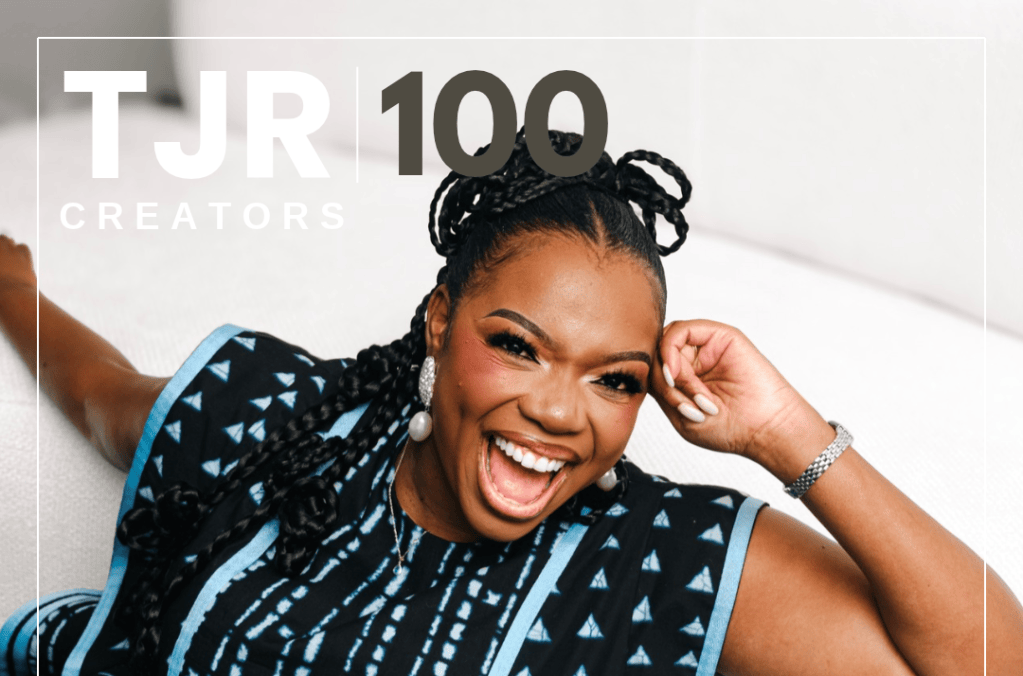
‘’The idea that women are too complicated to research because of their hormones is simply not true. Men and women both have hormones. Women’s health can be researched safely and ethically.’’
It is a statement that speaks to a much bigger conversation about the gender health gap and the need to take women’s health more seriously.
For Dr Katlego Selikane, this is not just a professional concern but a personal commitment to changing how women experience healthcare, motherhood and the world around them.
A medical doctor, mother and passionate advocate for better healthcare, Dr Selikane has built platforms that extend her work beyond the consulting room, creating spaces for conversations around motherhood, mental health, personal development and access to knowledge.
From Clueless Moms to Meet Me in My Corner, her initiatives are rooted in identifying gaps and finding ways to make information and resources more accessible to others.
In this TJR 100 conversation, she reflects on the realities of motherhood, the importance of setting boundaries, the shortcomings of South Africa’s healthcare system and why individualism continues to stand in the way of collective progress.
She also shares her approach to brand partnerships, the responsibility that comes with influence and her ambition to help create a world where women and children are better served.
Who are you outside of your work as a doctor and content creator?
I’m a mom, a wife, a daughter to two amazing parents and a little sister to an incredible woman. I’m passionate about being a humanitarian and, ultimately, being a decent human being because that’s how I was raised.
I love beautiful things, which sometimes means luxurious things. I also consider myself inquisitive and interested in life, human behaviour and understanding how people interact with one another. I’m a nerd who loves beautiful things, has a great family and genuinely feels that I’m living my dream life, with so much more still possible.
I have big dreams of changing the world when it comes to how women experience their health, motherhood and caring for their children. Children are also at the heart of everything I do. Ultimately, I’m interested in people, including understanding myself.
You describe yourself as a nerd. Medicine requires a great deal of curiosity and dedication. Would you say you were the typical medical student?
Not really. When I was studying medicine, the other students were often confused by me because I had another job. While many of them worked in the health sector, I was a makeup artist, juggling my studies with creative pursuits.
People sometimes underestimated me because I would come into class, be on my phone or even fall asleep. But whenever a question was asked, I could answer it, and I eventually graduated with a few distinctions.
I’ve always believed that you need to be more than one thing. Many medical students find themselves defined solely by their studies, and when that one aspect of their lives struggles, other areas are affected too. I’ve never allowed myself to be limited in that way. I have an appetite for knowledge, but what distinguished me was that I made my life colourful.
You’ve built platforms that serve different communities, from Clueless Moms to Meet Me in My Corner. What gaps did you identify that made you realise these spaces needed to exist?
When I finished medicine and started working as an intern during the height of COVID-19, I realised that students were being left behind. Universities had shut down, but students were still expected to develop into competent doctors.
I rallied other doctors and professionals to assist these students online through an initiative called Let Us Study With You. We started on WhatsApp before moving to Telegram, eventually reaching 800 students, including those studying in countries such as China and Russia.
I’m always interested in people and finding ways to help them. Most of the time, these initiatives come from personal experience. I identify a gap in my own life and want to address it, but I also want to create something that can help others.
That’s what informed Clueless Moms and Meet Me in My Corner. I was experiencing gaps in motherhood, personal development and mental health. I also recognise that I have certain privileges, and I don’t believe in keeping knowledge and resources to myself. Someone once shared their knowledge with me, and I believe in extending that same opportunity to others.
I will continue creating initiatives because I’m interested in people having good lives and finding ways to equalise the playing field.
You show up for so many people. How do you protect your own mental health and show up for yourself?
I haven’t taken care of myself for a very long time. It is only in my 30s that I’ve started realising the importance of saying no. It comes down to boundaries.
You also have to understand why those boundaries need to exist. That means practising mindfulness, spending time with yourself, practising your faith and constantly reminding yourself of what matters.
I’m fortunate to have a strong family structure, including amazing parents, a sister, a husband and two children. They remind me that I’m more than what I put online or what I do for other people. I also have to give back to them.
The preliminary findings of Harvard’s long-running happiness study, which I shared on my podcast in 2024, highlighted the importance of relationships in people’s lives. Nothing quite compares to the relationships we build with others. Community matters. Anything that threatens those relationships is something I have to protect myself from because I need my people and my community.
What’s one uncomfortable truth about motherhood that you wish people spoke about more?
I think many of these conversations are already happening. We know that motherhood doesn’t always make you feel equipped or confident that you’re doing the right thing.
What I want people to pay more attention to is the gap that can exist between your intention to be a mother and the actual experience of motherhood. Sometimes, we find ourselves struggling in that gap, and that’s where a lot of the guilt comes from.
For example, I may intend to raise a healthy, honest and kind child. But if I’m not consistently acting on those intentions, even through the small things, a gap develops between what I want to do and what I’m actually doing.
Realising that you’ve fallen short of your intentions, despite genuinely wanting the best for your children, can be difficult. That gap can contribute to anxiety and struggles with mental health.
When it comes to women’s health and young people’s health, what issues do you think still need greater attention?
When it comes to women’s health, we are still dealing with a gender health gap. Women remain under-researched and under-resourced, particularly when it comes to diagnostic technologies and medical professionals who understand the female body.
Many women live with conditions that go unrecognised, ignored or disregarded. We are also dealing with pain that we shouldn’t have to endure.
We need more women entering the medical and scientific fields, whether as scientists, microbiologists, engineers developing diagnostic equipment or healthcare professionals advocating for women’s health. The idea that women are too complicated to research because of their hormones is simply not true. Men and women both have hormones. Women’s health can be researched safely and ethically.
When it comes to young people in South Africa, sexual health needs particular attention. Young people deserve access to sexual health services that are free from stigma and judgement, equitable and allow them to exercise their agency. Comprehensive sexual education must also be practical and provide young people with information they can use to make informed decisions and protect themselves.
We have the knowledge and facilities, but our infrastructure needs to improve. People shouldn’t have to walk kilometres to access healthcare while we continue building luxury developments every other day.
Our health system is crumbling. When you speak to doctors still working in hospitals, they will tell you about clinics that have gone months without basic pain medication. How is that fair to someone who is suffering? That’s a service delivery failure.
South Africa has brilliant doctors, scientists, nurses and other healthcare professionals, yet many are sitting at home without employment. The world recognises our medical capabilities, but we are failing to make proper use of them. If we don’t wake up now, we may realise the extent of the damage when it’s too late. Health is the great equaliser.
What do you think is at the root of these challenges? Is it politics within the healthcare system?
I think it comes down to individualistic mindsets. People don’t always recognise that their actions affect others. We aren’t working together; we’re often working only to benefit ourselves.
Communities that are organised and work together can achieve incredible things. We need to move away from thinking only about individual gain and start prioritising collective progress.
You bring credibility through your qualifications and the platforms you’ve built. When brands approach you for collaborations, how do you approach negotiations and decide which brands to work with?
Fortunately, I now have management that helps me with strategy. We’ve recognised that my work isn’t simply about amplifying other brands; I’m also building my own brand.
I want to become a speaker and contribute to behaviour change, among other things. Therefore, the brands I work with need to align with those ambitions.
One of the questions I ask brands is what they intend to do for the community and how they plan to give back. People are tired of seeing influencers unbox products they received for free and then being encouraged to buy those same products when many are struggling financially.
I also look at a brand’s corporate social investment initiatives and whether they contribute to better health and the community. There are certain industries, such as alcohol, that I will never promote because I don’t believe they are good for communities.
When structuring brand deals, the partnership must compensate me according to my worth or offer value in another way. Sometimes, a collaboration can also be a brand-building exercise. Optics matter, and being associated with certain brands can strengthen how people perceive your own brand.
Ethics are also important. I’ve turned down brands because of issues they’ve been involved in that I don’t believe in. I’m open to dialogue, but if a brand isn’t willing to engage, I simply won’t work with it.
Quick-fire Qs
The last Netflix series or film you watched?
The Polygamist.
The newest song you’ve added to your playlist?
Party Island.
Your three most-played tracks?
I usually listen to gospel music. I also listen to Drake and Lil Durk. At the moment, I’ve also been playing Baby Lullabies because we use it to put my daughter, Luma, to sleep.
If there’s one conversation you could change in South Africa, what would it be?
How women of colour in South Africa experience motherhood.
Science or social media: which is harder to navigate?
Science.
Who do you want us to feature next? Nominate them here!


Leave a Reply