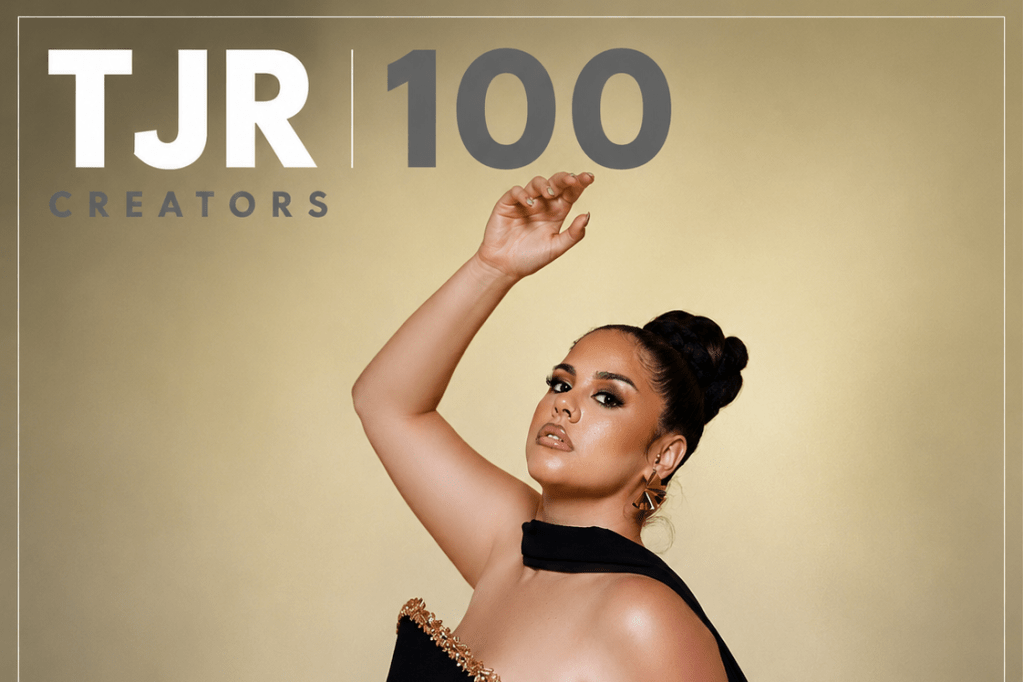
South Africa is a diverse country. Few creators have managed to capture that complexity as authentically as Anika Dambuza, better known as The City Makoti.
With more than 1.5 million followers across her social media platforms, Anika has built one of the country’s most influential digital brands by documenting her experiences as an Afrikaans woman married into a Xhosa family.
Through humour, honesty, and meaningful conversations, she has created a space where discussions around culture, family, motherhood, identity, and modern South African life feel both relatable and accessible.
As part of The Joburg Reporter’s TJR100 Creators campaign, I caught up with Anika to discuss authenticity, family, content creation, and the lasting impact she hopes The City Makoti will have on South Africa.
What inspired you to start sharing your journey so openly online?
Anika: I never set out to build a brand. I started sharing because I was living a life that felt very different from the one I grew up imagining. I am an Afrikaans woman from Cape Town navigating marriage into a Xhosa family, learning new traditions, new languages and a completely new way of life. People were curious, and I realised there were so many South Africans having similar experiences but not seeing themselves represented online.
What started as sharing my personal journey eventually became a platform about culture, family, identity and modern South African life. Today, I absolutely recognise that I am building a brand and a business. My vision for The City Makoti has grown beyond content creation. I want it to contribute to transformation in South Africa by encouraging understanding across cultures, while also empowering women to see that they don’t have to choose between ambition, family, culture and success. You can build a life that includes all of those things.
Your content often sits at the intersection of tradition and modern life. Why do you think that balance resonates with so many South Africans?
Anika: Because that’s how most South Africans actually live. We’re not choosing between tradition and modernity every day—we’re finding ways to make them coexist. You can be ambitious, career-driven and independent while still valuing family, culture and tradition. I think people connect with my content because it reflects the reality of modern South Africa. We are constantly navigating different cultures, languages, expectations and identities, and there’s beauty in that.
I also think we live in a time where conversations are becoming increasingly polarised. People often feel pressured to choose one side or the other. My experience has taught me that there is usually space for both perspectives to exist. I want to be a voice that acknowledges the value of tradition while embracing progress, because that’s where many South Africans find themselves.
What boundaries do you have because followers can intrude sometimes?
Anika: I’ve learned that accessibility and access are not the same thing. People might feel like they know me because they watch my content every day, but there are parts of my life that belong only to me and my family.
That being said, I am naturally a very open and transparent person. I’ve built my platform by sharing conversations that many people shy away from. A good example is when I openly spoke about being the primary breadwinner in my marriage. Those conversations can be uncomfortable, but they are also real. In a social media landscape where we often only see the perfect side of people’s lives, I think there is value in showing a more honest and nuanced reality.
I’ve also become comfortable saying no. Not every question deserves an answer and not every opinion deserves a response.
How do you decide which parts of your personal life to share and which parts to keep private?
Anika: I ask myself one simple question: does sharing this add value beyond my own life? If a story can educate, entertain, start a conversation or help someone feel seen, I’ll usually share it. If it’s something I’m still processing emotionally, or if it affects people who didn’t choose to be public, I keep it private.
How does your family respond to your fame? They also seem comfortable with being part of your content. How did that come about?
Anika: My family has been incredibly supportive, but nobody is forced to be part of my content. The reason people feel comfortable on camera is because the camera is never the reason we’re together. Whether I’m filming or not, we’re still having the same conversations, laughing at the same jokes and spending time as a family. If someone doesn’t want to be filmed, that’s completely respected.
How do you make sure you leverage commercially from brands while also remaining authentic?
Anika: I only work with brands that fit naturally into my life and my audience’s interests. My followers are smart—they can tell when something is forced. I always ask myself whether I’d genuinely use or talk about a product if there wasn’t a campaign attached to it. If the answer is no, it’s probably not the right partnership.
What role do creators have in fostering understanding and challenging stereotypes?
Anika: Creators have a unique ability to make unfamiliar things feel familiar. Sometimes all it takes is seeing someone else’s experience regularly to realise that we’re not as different as we think.
I don’t believe creators need to be activists, but I do think we have a responsibility to be thoughtful. Every piece of content either reinforces stereotypes or challenges them. Through sharing my own life honestly, I’ve hopefully helped people see interracial relationships, blended families and cultural differences in a more human way.
Admin is a huge challenge for many creators. Simple tasks such as responding to emails can be difficult if one doesn’t have a professional team behind them. Talk to us about the importance of professionalism as a creator.
Anika: One of the biggest misconceptions about content creation is that it’s just posting videos. In reality, creators are running businesses. There are contracts, invoices, negotiations, reporting, tax, strategy and client relationships. Creativity might get you noticed, but professionalism is what builds a sustainable career. Brands need to know they can rely on you to meet deadlines, communicate effectively and deliver quality work. Talent opens doors, but professionalism keeps them open.
One of my own weaknesses is that I’m a bit of a control freak. For a long time, I wanted to manage everything myself because I cared deeply about every aspect of the business. But as the brand has grown, I’ve realised that trying to do everything yourself can actually become a risk to professionalism. There comes a point where you have to learn to delegate, trust the right people and build systems that allow the business to grow beyond one person.
What impact do you hope The City Makoti brand will have on South Africa long after social media trends have changed?
Anika: I hope The City Makoti becomes bigger than social media. I want it to be remembered as a brand that documented a changing South Africa and helped people feel proud of who they are. If someone watches my content and feels more open to learning about another culture, more confident in embracing their own identity, or more hopeful about the future of our country, then I’ve achieved something meaningful. My goal has never been just to go viral; it’s to build something that lasts.
If South Africa’s story could be told through one family dinner table conversation, what do you think that conversation would sound like?
Anika: It would be loud. People would be speaking different languages, interrupting each other, disagreeing passionately and laughing five minutes later. Someone would be talking politics, someone would be talking rugby, someone would be serving food before everyone else is finished speaking. There would be different opinions, different backgrounds and different experiences around the same table. And somehow, despite all those differences, everyone would still leave with a full stomach and a story to tell.
To me, that’s South Africa—messy, complicated, diverse, sometimes frustrating, but ultimately connected.
As South Africa continues to evolve, The City Makoti stands as more than a content brand. It is a living archive of a country learning, growing, and finding common ground—one conversation at a time.
Who do you want us to feature next? Nominate them here!




Leave a comment