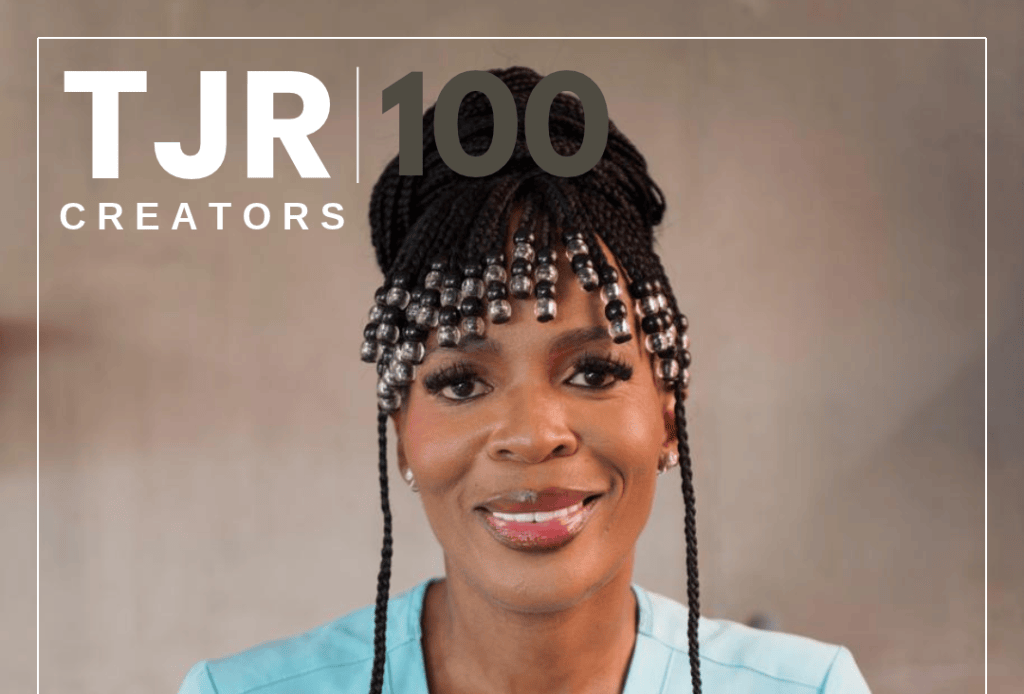
For Dr Mpume Zenda, the human body tells a story that goes far beyond biology. It carries our experiences, our relationships, our wounds and the things we struggle to put into words.
As an obstetrician, gynaecologist, sexologist and health advocate, she has built a career around helping people understand themselves better, particularly when it comes to sexual health, intimacy and pleasure; conversations that remain difficult for many South Africans to have openly.
Growing up as a Zulu girl in a traditional rural village, Dr Zenda understood how cultural expectations could shape the conversations people were willing to have about their bodies.
Her own experiences, combined with years of medical training and further studies in sexology overseas, led her to a field where science meets some of our most personal experiences.
Today, she uses her medical expertise and digital platforms to make complex health information accessible, challenging misconceptions while encouraging people to approach their bodies and relationships with greater understanding.
In this TJR 100 Creators feature, Dr Zenda opens up about the experiences that shaped her career, the lessons she has learned about kindness and boundaries, and why South Africa needs more honest conversations about sexual health, relationships and the ways we treat one another.
Beyond being an obstetrician, gynaecologist, sexologist and health advocate, who is Dr. Mpume Zenda?
At my core, I am a spirit fascinated by the connection between the human body, soul and spirit, and how we are shaped by life, love, family and the world around us.
I am a mother, a daughter, a scientist and a creative. I love art, Afro-Latin dancing and exploring different cultures.
Above all, I believe human beings are God’s most prized possession, and I find fulfilment in connecting with people.
What inspired you to pursue sexual medicine, a field that remains sensitive and often misunderstood in South Africa? Was there a particular experience that made you realise this was a conversation you wanted to lead?
Despite advances in science, sexual intimacy and pleasure remain conversations that many people struggle to have.
Growing up in a traditional rural Zulu household, these were not topics we openly discussed. Later, through my experiences in relationships and marriage, I realised how difficult it can be for people to communicate their needs, desires and boundaries.
I also became aware of how childhood experiences shape the way we relate to ourselves and others.
My journey led me to Professor Elna McIntosh, one of the pioneers of sexology in South Africa, who encouraged me to study the field overseas.
My work in sexual medicine grew from these experiences, my scientific training and what I believe is a gift I was meant to nurture.
Conversations about sex, intimacy and women’s bodies can attract judgement and criticism. What has been the most difficult criticism you have received for your work, and how have you learned to navigate it without compromising your message?
I have not experienced much direct criticism, but people sometimes make assumptions about my work or confuse my professional life with my personal life. Some assume that because I am a sexologist, I must want to talk about sex all the time.
I have invested in the scientific training behind my work, and that credibility matters. My responsibility is to take complex research and make it relatable to South Africans while respecting our cultural differences. Some people, including those in religious communities, may feel uncomfortable discussing sex, but we can have honest, meaningful conversations without being culturally or religiously inappropriate.
Looking at your journey so far, what has it taught you about yourself, and what is the next chapter you are working towards, both professionally and personally?
My journey has taught me the importance of boundaries, self-awareness and the difference between being kind and simply being nice. I used to prioritise keeping the peace, often at my own expense. I have since learned that kindness must also include kindness towards yourself.
Professionally, I have realised that understanding sexual intimacy requires understanding human beings, their psychology and the experiences that shape them. Personally, I am on a spiritual journey, becoming more intentional about the work I do and the life I want to live.
I am working on books and exploring the possibility of a documentary towards the end of 2027 or in 2028. Ultimately, I want to create work that is meaningful to me, my daughter and the people I reach, particularly women.
South Africans are heading to the polls on 4 November. What would you like to say to young people who are unsure about whether or not to vote?
I love South Africa, but I am deeply disappointed by our leadership. Many politicians have lost touch with the people they were elected to serve, while ordinary South Africans continue to struggle with unemployment, poor services and the cost of living.
Young people should look at party policies and identify the issues that matter most to them. No party will meet every expectation, so understand your non-negotiables. But voting is only the beginning. We must hold elected leaders accountable for what they promise and educate ourselves so that our voices carry weight.
We must also think beyond our immediate needs and consider future generations. Our vote comes with responsibility: to participate, demand accountability and contribute to building a better country.
Quick Fire Qs
One misconception about women’s sexual health you wish you could erase?
That women’s bodies are betraying them. Our bodies communicate with us, and we need to learn to listen to them. Women deserve to know that they are enough and that their bodies are not inherently wrong.
What is one thing every woman should know about her body?
Your body changes throughout your life, from puberty to your reproductive years and menopause. Understanding these changes can help you find peace with your body and embrace every stage of womanhood.
What is one sexual health question women are often too afraid to ask?
“Why don’t I feel like having sex? Does it mean I don’t love my partner?” Differences in sexual desire are common, and understanding how our bodies, hormones and experiences influence intimacy can help couples navigate them without blame.
What is one thing you wish more men understood about women’s pleasure?
It’s not just physical; connection matters. Men and women may experience vulnerability and emotional intimacy differently because of how we are socialised. We need to create spaces where both can be themselves, feel understood and heal. Love should not be about control or manipulation, but acceptance.
Science or social media: which is harder to navigate?
Both have their challenges, but I am fortunate to do work I love. I had years of scientific training before entering social media, where I wanted to make health information more accessible to women who might not be able to visit a doctor’s practice. I have learned that it is okay to be an expert in one area and a beginner in another.
What is one word your closest friends would use to describe you?
Kind. I believe kindness and compassion are my superpowers.
What is one thing you are still learning about yourself?
I am still learning how to live as a spiritual being in a physical world, align myself with meaningful work and reduce the suffering we experience, even when the world around us does not change.
Complete the sentence: If there is one conversation I want to change in South Africa, it is…
I want us to understand that we do not only have a gender-based violence problem; we have a broader problem with violence.
We need to move away from pitting men and women against one another and instead create spaces where both can participate in healing our relationships and our communities.
We must learn to ask one another, “How can we do this together? What do you need, and what do I need?” We can respect our differences without competing or hurting one another.
Ultimately, we should be building a country and a society that we can be proud to pass on to our children.
Who do you want us to feature next? Nominate them here!



Leave a Reply