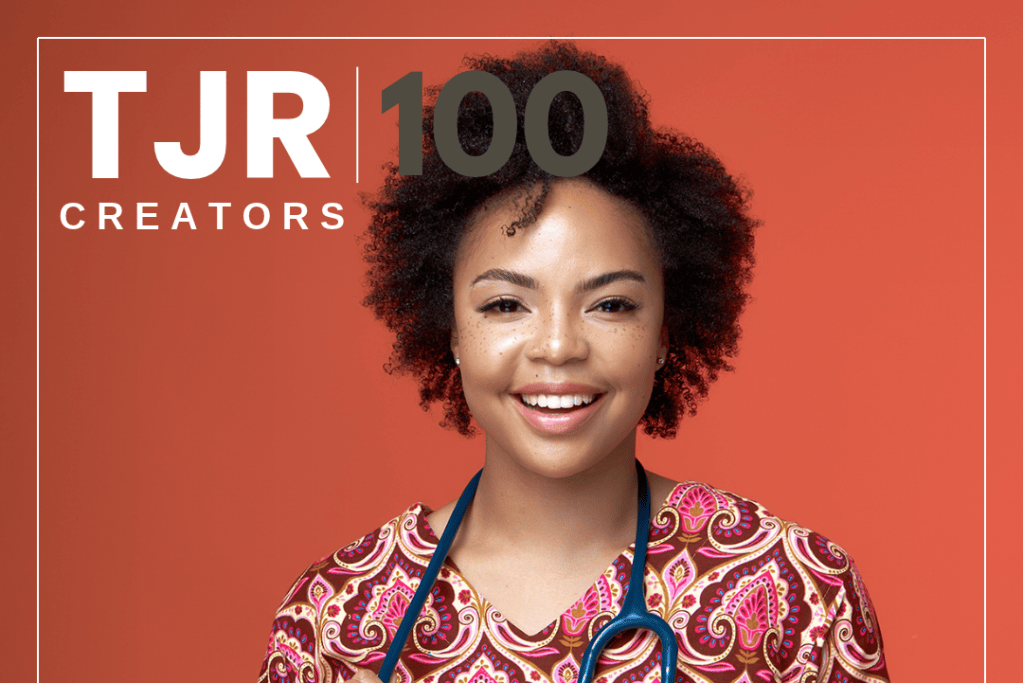
“Gooooood morning everybody!” For thousands of people scrolling through social media, that enthusiastic greeting has become instantly recognisable — a signature that reflects the warmth and energy of paediatrician and content creator Dr Nokukhanya Khanyile-Lenake.
Managing a demanding medical career alongside a growing digital presence requires more than passion; it takes discipline, clear boundaries and the right support system.
Dr Khanyile-Lenake is deliberate about keeping her family first, her work second and social media engagements thereafter, with a management team helping her navigate opportunities without compromising her responsibilities as a doctor.
She also recognises the responsibility that comes with having an audience, carefully considering what she shares online and how it could affect her family, her professional reputation and the people who look to her for guidance.
As we continue with The Joburg Reporter’s TJR 100 Creators feature, Dr Nokukhanya Khanyile-Lenake shares insights on the importance of having a management team, navigating medicine, and using her platform to fight health misinformation.
How important is it to have a management team coordinating your media and public engagements, and how does it impact your relationship with the public?
Having a team behind me is really important because my days are very busy, and there are a lot of decisions I need to make, whether they involve patients or my family. Nicole helps take a lot of the administrative work off my plate. Most of my days are spent attending to patients and working in hospitals, so she can respond to enquiries quickly rather than people having to wait until I have a gap in my schedule, which sometimes only comes after 5pm.
She also ensures that communication with clients is professional, that nothing is forgotten and that deliverables are completed on time. Because we have worked together for so long, she understands what I can and cannot commit to.
She helps streamline the process and communicates what I need to do, allowing me to prepare properly while ensuring that engagements fit into my schedule.
Would you say you run your personal brand as a business?
Absolutely. As a content creator, it is important to operate within the law, particularly when it comes to tax in South Africa. All my engagements go through a separate company, for which we submit returns and manage the business side of things.
It is also important for me to separate myself as a brand from myself as a medical doctor because content creation is an extension of what I do. I am first and foremost a medical professional. My content is a way to expand my audience and empower the communities I want to reach, particularly mothers and babies who need access to health information.
Who is Dr Nokukhanya Khanyile beyond the titles of paediatrician, content creator and public figure?
I always say that I am just a real girl in a big world, taught by an awesome God to serve His people. I have believed that for a very long time. As a mother, wife, daughter and child of God, I try to bring joy to the people in my life and live out the meaning of my name by bringing light to those around me.
I am also a lifelong student who loves learning and teaching. I believe that if I do not understand something, it becomes difficult for me to teach it to someone else. That principle influences how I approach my family, my faith and even my fitness journey.
I believe in holistic health, and through my platform, Mental Matters South Africa, I try to show people what holistic health can look like across the physical, psychological and social aspects of our lives.
How do you balance being accessible to your followers while maintaining personal boundaries, particularly when social media can make people feel entitled to your life?
I always say that I have a private but not a secret life. There are two guiding principles I use whenever I share content. The first is to ask myself whether I would be comfortable if a random stranger approached my daughter, my husband or me and asked about what I had shared.
The second is whether my mother-in-law, my parents or even a future employer would be proud of that post if they saw it today or five years from now.
These principles allow me to share my authentic self while recognising that, as a public figure, what I say and do can affect other people, including my family. I also consider the language I use and the information I share, particularly when it comes to scientific evidence and data. I want to ensure that what I communicate remains responsible and useful, even years down the line.
What conversation about children’s health do you believe is not receiving enough attention in South Africa?
I think we need to talk more about how much easier it is to care for children when parents have access to the right information. Because of misinformation and disinformation on social media, parents are making drastic decisions about things that should be relatively straightforward.
They are sometimes relying on opinions instead of evidence-based information to make decisions that could have life-threatening consequences.
Vaccination is one example. Many people have not seen how devastating certain diseases can be because vaccination has helped protect generations of children. As a result, some parents may underestimate the consequences of choosing not to vaccinate their children.
The first five years of a child’s life, particularly the first 1,000 days, including pregnancy, are critical to their health and development. This is where my work as a paediatrician becomes particularly important.
Just because a parent lived a long life does not necessarily mean that every health decision they made was right; sometimes, they were simply fortunate.
I also believe we need to have more conversations about children’s mental health. Children are often seen but not heard. When we do listen to them, we need to validate their feelings while helping them learn to express those feelings in healthy ways.
My work focuses on both physical and mental health because I want to contribute to holistic healthcare for parents and children.
Is the mental well-being of healthcare professionals being prioritised in South Africa’s public health institutions?
On the surface, there is a lot of passion for ensuring that healthcare professionals have good mental health. However, when you look at day-to-day working conditions, the reality is often different.
It depends on several factors, including staffing levels, the resources available at a hospital, whether someone works in primary, secondary or tertiary healthcare, their level of training and the manager they report to. An intern, a registrar training to become a specialist and an established specialist may have very different experiences.
A manager who understands mental health and actively encourages a supportive working environment can make a significant difference, even when circumstances are difficult. Because there are so many variables, I do not think we can confidently say that healthcare workers’ mental health is consistently prioritised.
When someone in a position of authority does not understand the seriousness of mental health challenges and sees them as an excuse, healthcare professionals can find themselves unsupported.
Has your social media presence ever presented challenges in the workplace, given that medicine is often viewed as a strict and highly regulated profession?
I think being in paediatrics plays into my personality because I am expected to be playful with my patients, while also knowing when to be serious. My work also involves having difficult conversations with families, which requires me to communicate effectively.
Communication is part of our training as medical professionals. We are taught and assessed on our ability to explain complex medical diagnoses to people with different levels of education. That training also helps me communicate health information on social media.
The reception has been mixed. Some junior colleagues and people who do not work directly with me find my work aspirational, while people at my level or above have had varied reactions. However, I have always taken my work seriously and ensured that I remain competent.
My family also played a role in teaching me how to engage with complex topics and manage multiple responsibilities professionally. I have never allowed social media or brand partnerships to interfere with my work.
My team has been particularly important in this regard because I can communicate when I anticipate a difficult month and ask them to reschedule engagements or negotiate shorter commitments.
My family comes first, my work comes second, and social media comes after that. Because I have been firm about those priorities without being rude, I believe people at work have respected them.
How can parents distinguish credible medical advice from misinformation that could put their children’s health at risk?
My advice is that if something sounds strange, it probably deserves to be questioned. If you encounter information online that does not make sense or contradicts what you have been told, speak to your healthcare provider. Do not be afraid to ask questions during a consultation; that is what the appointment is for.
If you do not have medical aid, you can visit your local clinic and speak to a nurse or doctor.
I would not recommend relying on random Google searches or treating advice from family and friends as a substitute for professional guidance. This is especially important when it comes to giving children medication or exposing them to treatments and therapies.
What is your view on the growing use of artificial intelligence in healthcare?
I think AI is great when it is used responsibly. From a healthcare professional’s perspective, it can reduce administrative work. For example, writing notes and typing patient information can sometimes take me away from the human connection that is central to being a doctor. If AI can help with administrative tasks, it gives me more time to focus on patients.
It can also help flag things that I might miss, particularly in busy healthcare settings where I need to assess patients quickly and identify warning signs. However, it should support my work, not replace me.
From a patient’s perspective, AI can help people recognise warning signs that mean they need to go to a hospital rather than wait. It cannot necessarily tell you exactly what a diagnosis is, but it can help identify symptoms that require urgent medical attention.
At the same time, AI can hallucinate and generate symptoms or resources that are not real, so people must be cautious about relying on it. Nevertheless, because healthcare professionals are a limited resource, AI tools that provide quick, accessible information could help people make decisions about when to seek care.
This is also why social media is important to me: I want to educate people about warning signs and help them understand when and how to get assistance.
What is your message to young South Africans who are undecided about voting in the local government elections?
Think about what happens when you wake up in the morning. When you switch on your lights, is there electricity? When you take a bath, is there water? Think about the roads around you, your public transport system, traffic lights, schools and other resources available in your community. These are all connected to local government, and they are the issues that local elections address.
Look at the political parties’ manifestos and consider what you agree or disagree with. Explore content from creators and websites that provide information aligned with your values, while remaining open to different perspectives. Think about which party most closely aligns with what you want to see in your community and vote accordingly.
If you do not vote, you will still be affected by the decisions made about your community, including whether you have access to water and other essential services. Change happens little by little. We are drops that can contribute to a bigger pool and, ultimately, a wave of change.
Quick Fire Qs
Last song you added to your playlist?
“Your Friend” by Gregor Salto, Zakes Bantwini the Extended Mix.
Last film or series you streamed?
Marvel Zombies on Disney+. I am a big Marvel nerd.
Common mistake parents make when raising their children?
They do not trust their own gut when it comes to taking care of their children.
What is one symptom in a child that parents should never ignore?
If your child is breathing fast or complains of chest pain. There are many other warning signs, but those are two important ones.
Who do you want us to feature next? Nominate them here!



Leave a Reply