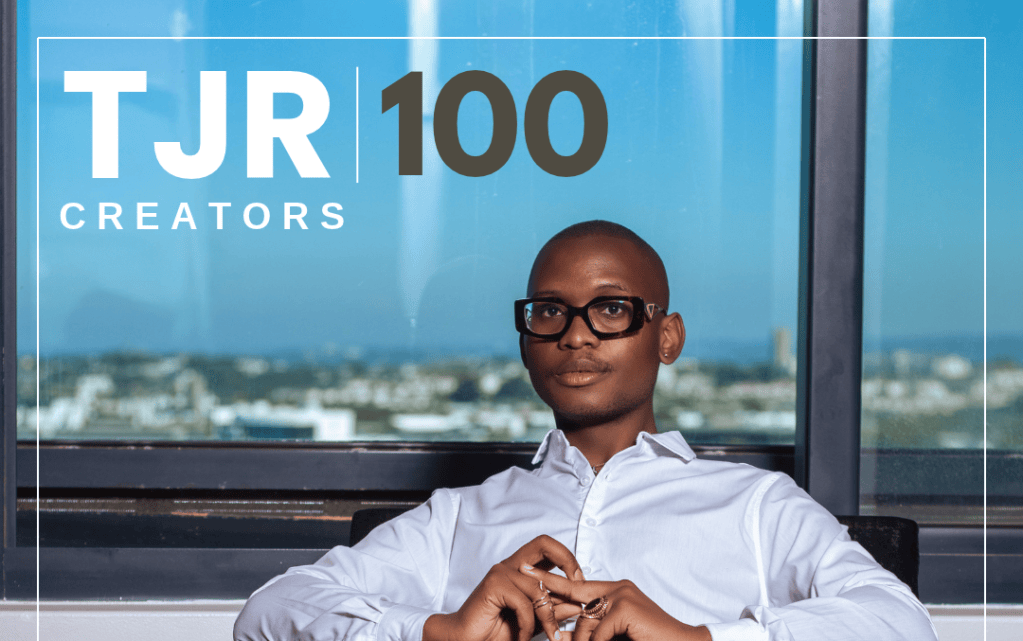
Watching television is one thing; knowing how to dissect a story, challenge its execution and articulate why it works — or doesn’t — is another.
For Mbuyiselo Vilakazi, entertainment commentary goes further than just sharing an opinion. It is about research, critical thinking and holding film and television productions to a standard that respects both the craft and the audience.
Through his considered approach to reviewing South African entertainment, Vilakazi has created a platform for himself in the digital landscape, building a reputation as a voice whose opinions are backed by more than just what appears on screen.
Away from the screen, he is a man who finds comfort in his own company, enjoys travelling and is candid about the loneliness and sacrifices that can accompany life in the public eye.
As part of The Joburg Reporter’s Creators 100, we get to know the man behind the opinions and explore the thinking that informs his work.
Who is Mbuyiselo Vilakazi beyond the content people see on social media?
I’m a grounded individual who loves being indoors, watching television and enjoying my own space. I’m not necessarily someone who enjoys the idea of going out, but once I’m out, I usually find myself having a good time.
I also love travelling because it gives me a sense of peace. Beyond content creation, I’m someone who values solitude, enjoys observing the world around me and finds comfort in the simple things.
What do you think makes your content stand out in an increasingly crowded digital space?
Research is at the heart of my content. I don’t just watch television and share my opinions; I take the time to understand what I’m watching and offer an informed perspective.
Over the years, I’ve built credibility with my audience, and I believe that trust is what sets my content apart. People know that when I speak about a production, there is thought and research behind my analysis.
Content creation can look glamorous from the outside. What has been the most difficult part of your journey that people rarely see?
Loneliness is one of the most difficult aspects of my journey. Being in the public eye can be isolating, and the demands of content creation mean you sometimes miss out on important moments in your own life.
There is also the challenge of learning to trust people. You become cautious because you’re never entirely sure whether someone has genuine intentions or is approaching you for the wrong reasons.
Over time, you find yourself building walls to protect your peace. People see the content and the opportunities, but they don’t always see the sacrifices that come with them.
How do you strike a balance between being an honest, critical reviewer and being fair to the people behind the films and television productions you critique?
My legal background has been incredibly valuable in teaching me to be objective, fair and analytical. I’ve carried those principles into my work as an entertainment commentator.
For me, criticism should never be personal. I assess the work based on what is presented on screen, looking at the storytelling, performances and overall execution.
You can acknowledge that a production has shortcomings without undermining the people who worked hard to bring it to life. My responsibility is to offer an honest assessment while remaining fair to the work and the people behind it.
With streaming platforms changing how audiences consume entertainment, what do you believe the future of South African television looks like?
I believe there is still room for traditional television. While streaming platforms are growing, they depend on internet access, and not everyone in South Africa has reliable or affordable connectivity.
Traditional television therefore remains important in reaching diverse audiences. At the same time, I think we’ll see more content being created and distributed through digital platforms, including YouTube.
We are moving towards a landscape where storytellers have more opportunities to produce and distribute their work independently. The future, in my view, is not necessarily about one platform replacing another, but about different platforms finding ways to coexist.
South Africa has a rich storytelling culture, but not every production receives the same attention or support. What needs to change to strengthen the local film and television industry and give more stories the recognition they deserve?
I would love to see South Africa collaborate more with other African countries.
We have so many stories, cultural experiences and social realities that connect us, yet our industries often operate in isolation.
I believe that if African stories are to receive greater international recognition, we need to build stronger relationships across the continent. Collaboration can open doors to new audiences, shared resources, bigger markets and stories that reflect the richness of our collective experiences.
No African country should have to tell its stories in isolation when there is so much we can achieve together.
It is Pride Month. How would you assess queer representation in South African film and television? Are we seeing more authentic, nuanced portrayals of LGBTQ+ people, or is there still a long way to go?
I think there is still a long way to go. While queer characters are becoming more visible, we continue to see certain stereotypes repeated, particularly when it comes to flamboyant characters.
There is nothing wrong with flamboyance, but queer people are not a monolith.
We have different personalities, experiences, backgrounds and ways of expressing ourselves.
I would love to see more nuanced portrayals that reflect the diversity of queer lives. We need stories that allow LGBTQ+ characters to exist beyond their sexuality, with their own ambitions, flaws, relationships and complexities.
Representation should not simply be about having a queer character on screen; it should be about telling their story authentically.
QUICK-Fire Qs
Last Netflix film or series you watched?
East of Eden.
Last song you added to your playlist?
“Genesis” by Zlatan featuring Flavour. I’m in my Afrobeats bag at the moment!
One South African series everyone should watch?
There’s a series called Niggies, based on a true story from the 1970s about cousins who went missing. I would also recommend Shaka iLembe, which is a remarkable production.
A film or series you think is overrated?
Money Heist. I know it has a massive following, but it’s one of those shows I consider overrated.
One South African actor you think deserves more recognition?
Tinarie Van Wyk Loots, an Afrikaans actress. I think she is one of the best actresses in the country and deserves even more recognition for her talent.
A queer character on screen who left a lasting impression on you?
Queen Moroka. I know she isn’t queer, but she is a queer icon! I think many young
queer people have been able to live vicariously through her character. There is something about her presence and the way she carries herself that has resonated with audiences.
Subtitles on or off?
Subtitles on, always! I even watch television shows in my own language with subtitles. I love them.


Leave a Reply