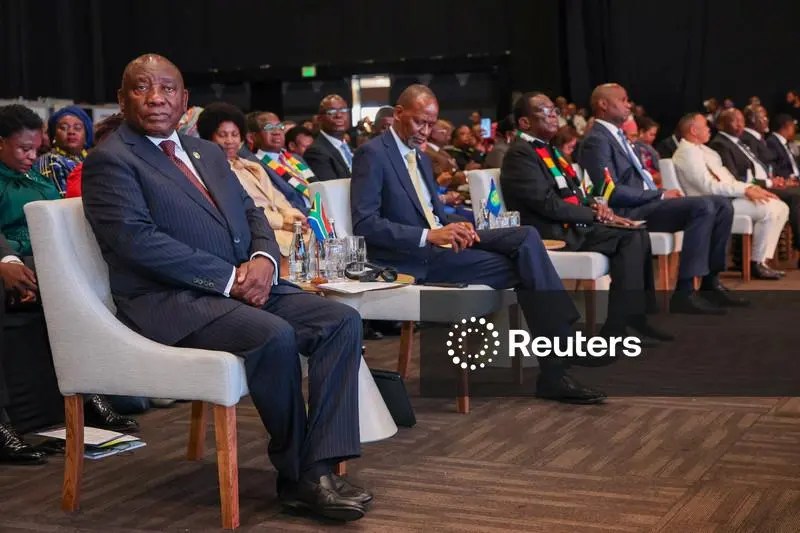
South Africa is hosting the 46th Ordinary Summit of Heads of State and Government of the Southern African Development Community (SADC) from 16 to 17 August 2026 in Durban, KwaZulu-Natal Province.
This Summit ushers in South Africa’s tenure as Chair of the regional economic community for the next twelve months. At present, South Africa is serving as the interim chair of SADC.
Public Perspective and Institutional Mandate
Whenever South Africa takes part in multilateral organisations such as BRICS, G20, UN, SACU, SADC and others, there is a consistent public interest regarding the mandate, tangible benefits, and value of these institutions.
This curiosity is especially prevalent against the backdrop of illegal migration, which often results from desperation caused by political and economic instability—issues central to SADC’s founding purpose.
Historical Background
The Southern African Development Community, comprising 16 member states, was established in 1992. It succeeded the Southern African Development Co-ordination Conference (SADCC), which operated from 1980 to 1992 and originated in Lusaka, Zambia. While SADCC aimed to reduce reliance on the apartheid-era South African government, SADC’s main goal is to promote the integration of economic development among its members.
Key Statistics
- Population: 382 million
- GDP at Current Price: $847 Billion (R13,695.34 Billion)
- GDP Growth: 3%
- Intra-Trade: $79 Billion (R1,277 Billion)
- Debt to GDP: 55%
Intra-Regional Trade and Economic Dynamics
Intra-regional trade within SADC has historically accounted for 18% to 20% of total trade. However, trade is significantly constrained by limited manufacturing capacity, tariff barriers between member states, and underdeveloped logistics infrastructure. South Africa dominates intra-SADC trade, representing more than 80% of the region’s commercial activity with the rest of the continent—a trend that has persisted since the pre-democracy era.
SADC Mandate and Objectives
The SADC Treaty (1992, as amended) outlines the objectives of the community in Article 5:
- (a) Achieve economic development, peace and security, and growth; alleviate poverty; enhance the standard and quality of life of the peoples of Southern Africa; and support the socially disadvantaged through Regional Integration.
- (b) Promote common political values, systems, and other shared values transmitted through institutions which are democratic, legitimate, and effective.
- (c) Consolidate, defend and maintain democracy, peace, security and stability.
These objectives are partially overseen by the Integrated Committee of Ministers.
Integrated Committee of Ministers: Structure and Function
| Article 12 | |
| Structure | Function |
| The Integrated Committee of Ministers shall consist of at least two ministers from each Member State. | It shall be the responsibility of the Integrated Committee of Ministers to: (a) oversee the activities of the core areas of integration which include: (i) trade, industry, finance and investment. (ii) infrastructure and services. (iii) food, agriculture and natural resources; and (iv) social and human development and special programmes. (b) monitor and control the implementation of the Regional Indicative Strategic Development Plan 2020 – 2030 in its area of competence |
Legal Framework and Compliance
SADC has an established legal framework to ensure compliance, outlined in Chapter 13 – Sanctions, Withdrawal and Dissolution.
The SADC Treaty and its protocols are legally binding international agreements for member states. Article 16 provides for the establishment of a Tribunal to address disputes.
However, civilians are barred from directly holding SADC accountable through grievance submissions to this body.
This means that even if citizens of SADC member states believe the organisation is failing to fulfil its mandate, they are denied direct access. While SADC is well-equipped with policy frameworks, it faces significant challenges in implementation, resulting in persistent socio-economic conditions that continue to justify its existence.
Challenges and Limitations
SADC faces several notable limitations:
- Lack of independent enforcement – There is no regional penalty system or police force
- Sovereignty over regional interests – Domestic interests often take precedence over regional objectives
- Consensus-driven politics – Diplomacy is characterised by quiet, “brotherly” approaches
Migratory Impacts and Socio-Economic Consequences
With these existing limitations, SADC struggles to implement its objectives effectively. This failure is evident in migration patterns, both legal and illegal, as most migrants in the region are classified as economic migrants from countries rich in natural resources and youthful populations.
These ongoing shortcomings render the 46th Summit another “talk shop” with little material value for citizens of the region, especially those in South Africa, who bear the brunt of the consequences stemming from these failures.
However, citizens still hold on to hope that the SADC satisfactorily implement is own policy to their material benefit and break from the prevailing colonial economic structures, and systems of division and suppression.
Hold current leaders accountable for governance failures, suppression of democratic rights, corruption, poverty and deaths.





Leave a comment