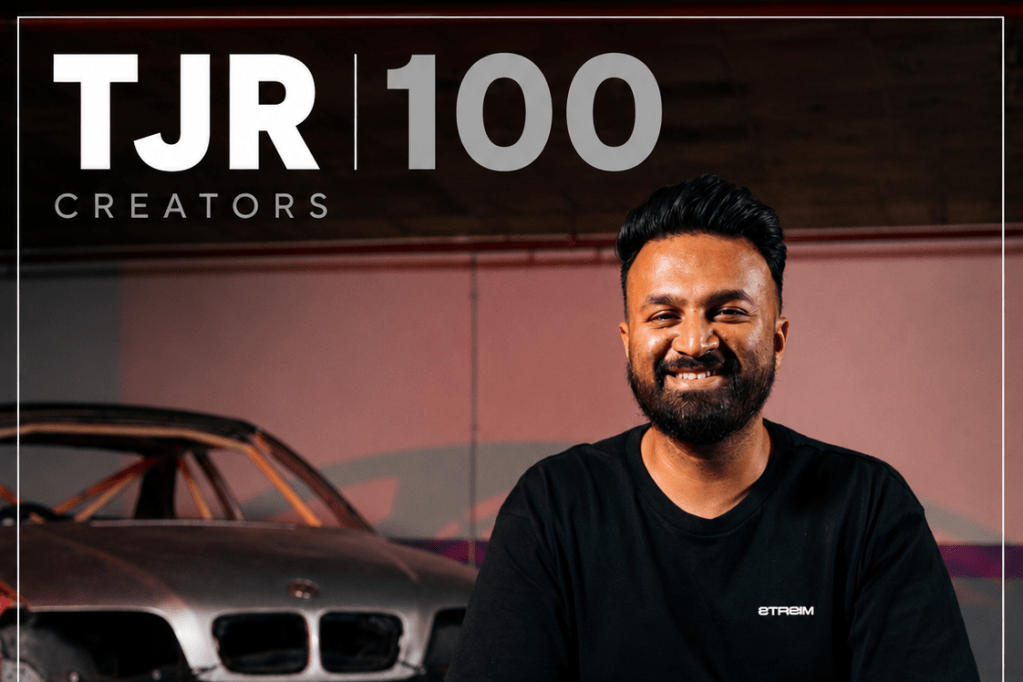
Every successful creator has a story that starts long before the followers, brand partnerships, and dream collaborations. For Matthew Kanniah, that journey began with a passion for creativity, a camera, and an unwavering belief that cars are more than machines; they tell stories, evoke emotion, and connect people.
Since launching Heart of Motion in 2017, Matthew has grown one of South Africa’s most recognisable automotive platforms, building a community of more than 100,000 followers while working alongside global brands including Porsche, BMW, Audi, and Red Bull.
As part of the TJR 100 Creators Campaign, we caught up with Matthew to discuss the journey from selling his own car to fund camera equipment, the importance of authenticity in brand partnerships, the challenges of South Africa’s automotive industry, and why staying true to yourself matters more than chasing trends.
You founded Heart of Motion in 2017 and have since built a community of more than 100,000 followers. What inspired you to start, and did you ever imagine it would grow to this level?
I never imagined it would grow this far. I started with a love of creativity, first through Instagram meets like Explore ZA and basic phone photography. I took a big risk selling my car for camera gear after being dismissed from my job. That leap helped me build a portfolio.
I was inspired by the beauty in cars and wanted to show that they have a heart. Over time, sharing that passion became a career, and it’s humbling to inspire others along the way.
Your content spans automotive, motorsport, travel, and lifestyle. How do you balance those different interests while maintaining a clear brand identity?
I balance these themes by embracing the full experience. Cars, places, and lifestyle all naturally intersect. I stay authentic.
When brands invite me to experiences, I immerse myself fully, showing how it all connects: fashion, great photos, beautiful places. I’m not just about cars; I’m a personality. By presenting that full circle, I maintain a cohesive brand identity.
You’ve worked with some of the biggest names in the industry, including Porsche, BMW, Audi, and Red Bull. How do you maintain authenticity while collaborating with major brands?
When brands approach me, they believe their product fits my content, but I also guide them to ensure it aligns naturally.
I decline partnerships that don’t fit. My content should feel authentic, paid or not. When I do collaborate, the brand complements what I already do through seamless product integration that amplifies my natural content.
Automotive content can often be highly technical. How do you make complex topics accessible and engaging for everyday audiences?
When I began, many of my female friends told me they appreciated how I explained cars, which made them feel included rather than overwhelmed. The car world can be technical, so I simplify concepts in a way that educates without condescension. My goal is to make everyone feel they’ve learned something so they can confidently talk about it, too.
Share your most unpopular opinion about cars.
I feel cars have become too digital. I miss analog buttons and tactile controls. Today, it’s all screens and ambient lighting. I also miss larger displacement engine cars with soul and purpose.
Not everything needs to be a crossover, and I think hybrids or cleaner fuels are smarter paths than full electrification. I respect progress, but I miss the visceral connection of an engine.
Social media often shows the glamorous side of automotive content. What are some of the challenges and realities that people don’t see behind the scenes?
The challenges I face are universal, especially here in South Africa, where the industry often runs on who you know rather than just merit.
I don’t always get access to vehicles by choice; it depends on who makes the decisions behind the scenes. I’d love to work with all the brands, but if someone in charge doesn’t like me or is swayed by others, I’m cut off.
I believe it should be about the quality of the content and what I bring to the table. Brands do need to be careful, but it should still be merit-based.
Even as someone who works with top brands, I still can’t reach others I aspire to. On top of that, we pour so much time, effort, and money into content, and when it doesn’t get engagement, no shares, no likes, it really affects our future opportunities. It’s a tough game.
Have you ever faced criticism from audiences, brands, or fellow enthusiasts, and how do you navigate those moments?
Yes, I face criticism all the time. The key is to introspect, really ask myself if the feedback has merit or if I need to challenge it. I never respond impulsively; I take a step back, look at the facts, and ensure I have my credentials to back me up.
People are quick to judge without knowing the full context of why something was delayed or a detail wasn’t perfect.
With brands, it’s the same: I stay open, honest, and transparent, but I also keep some boundaries. Social media can be a curated highlight reel, but I try to balance good content with honest, measured communication, all while protecting my brand and integrity.
What has been the biggest lesson you’ve learned about building a personal brand and business in the creator economy?
The biggest lesson I’ve learned is that building a personal brand and a business in the creator economy is really tough and deserves respect. No one really teaches us the business side of invoicing, setting terms, or handling contracts. Often, brands take advantage, assuming creators will work for less.
The biggest lesson is learning those overlooked business skills that no one taught us in school. Thankfully, some mentors helped, but it’s also on us to ask for guidance. We have to protect ourselves and know our worth because sometimes a paycheck conflicts with our values.
Staying true to our brand, ethics, and business knowledge is what keeps us grounded in the long run.
Who is Matthew outside of content creation and entrepreneurship?
Outside of content creation, I’m just someone who loves people and their passions. I didn’t come from money; I started with nothing, teaching myself everything along the way. I’m humble, and I love connecting with others, whether it’s cars or just other interests like food, fashion, travel, sports, or gaming.
I enjoy switching off, spending time with friends, and staying curious about life. At the end of the day, I’m just a regular guy who loves living fully and connecting with others.
Who do you want us to feature next? Nominate them here!
Matthew’s story is a reminder that success in the creator economy is rarely an overnight achievement. Behind every polished video and exciting brand collaboration are years of calculated risks, persistence, and a commitment to staying authentic, even when opportunities come with compromises.





Leave a comment