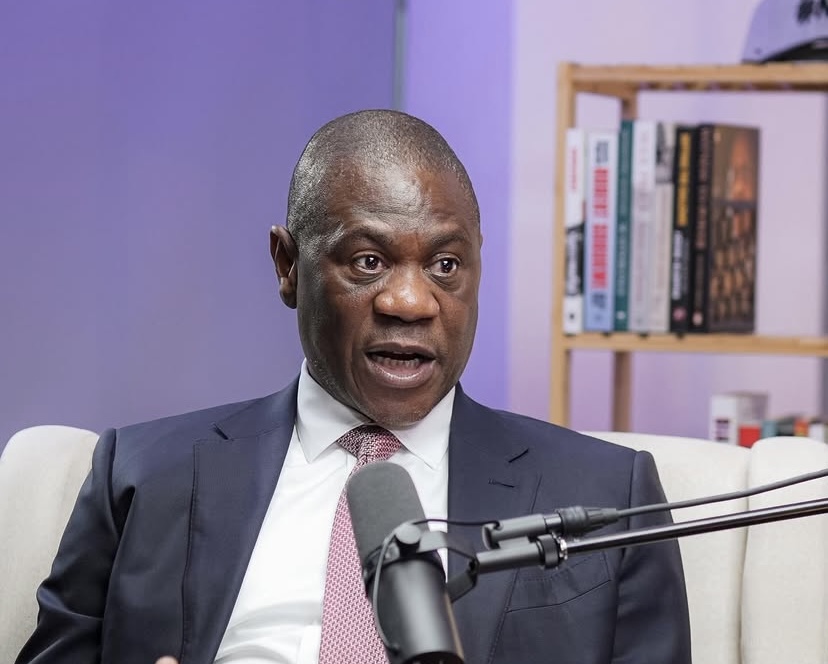
This past week, South Africa’s Deputy President, Paul Mashatile, was a guest on Dr. Sizwe Mpofu-Walsh’s podcast, SMWX. His appearance is a milestone for the growing influence of podcasts in the country.
Mashatile’s visit elevates the role of podcasts as trusted news platforms, and it shows a notable shift in how politicians & government officials are choosing to communicate.
It elevates podcasts not only as relevant but also as credible spaces for serious national dialogue. However, traditional media sources still dominate as South Africa’s most trusted news sources.
When the second in command of the country sits across you on a podcast, it shows that podcasts are increasingly being taken seriously and adds trustworthiness to the platform .
What makes this particular appearance significant are the issues discussed during the interview. This was not a frivolous conversation.
The deputy president addressed a couple of issues, like the ongoing conflict between the African National Congress (ANC) and the Democratic Alliance (DA). The shooting of his motorcade a few months ago, & allegations of nepotism against him which he firmly denied.
It was also quite insightful to learn that Mashatile, according to himself, pioneered the underground rail idea, which is now known as the Gautrain.
He also reflected on the good old days when he was serving the Gauteng government under Tokyo Sexwale.
Now, podcasts in South Africa have come under scrutiny in recent months.
One of the most talked-about incidents was when MacG, host of the popular Podcast & Chill, made horrible comments about TV presenter Minnie Dlamini’s private parts because of her breakup with plastic surgeon Dr. Brian Monaisa.
This controversy sparked a strong response from government representatives, who called for regulation of podcasts.
Khusela Diko, chairperson of Parliament’s Portfolio Committee on Communications, said in an interview with SABC News:
“There has indeed been a lot of backlash to the comments made by MacG. It’s not so much about MacG himself, but what it brings into focus is the wider issue of podcasting.”
She added that the government is looking to update the country’s laws to better deal with modern media challenges, specifically through the completion of the audiovisual policy.
Mmapaseka Steve Letsike, the Deputy Minister in the Presidency for Women, Youth, and Persons with Disabilities, also condemned MacG’s comments.
The Future of Podcasts In South Africa
Despite these controversies, podcasts continue to grow in South Africa. According to Statista, the number of podcast listeners in South Africa is expected to rise from 3.2 million in 2023 to 4.8 million by 2027.
This growing audience means podcasts are becoming an increasingly important part of the media landscape. However, it also means that podcasters must work harder to ensure their content is credible and well-researched.
To build trust with listeners, podcasters should focus on providing quality content, no matter the topic. This includes doing thorough research, inviting credible guests, and asking insightful, relevant questions. By doing this, they can keep their audience engaged while also contributing positively to the media landscape.






Leave a Reply