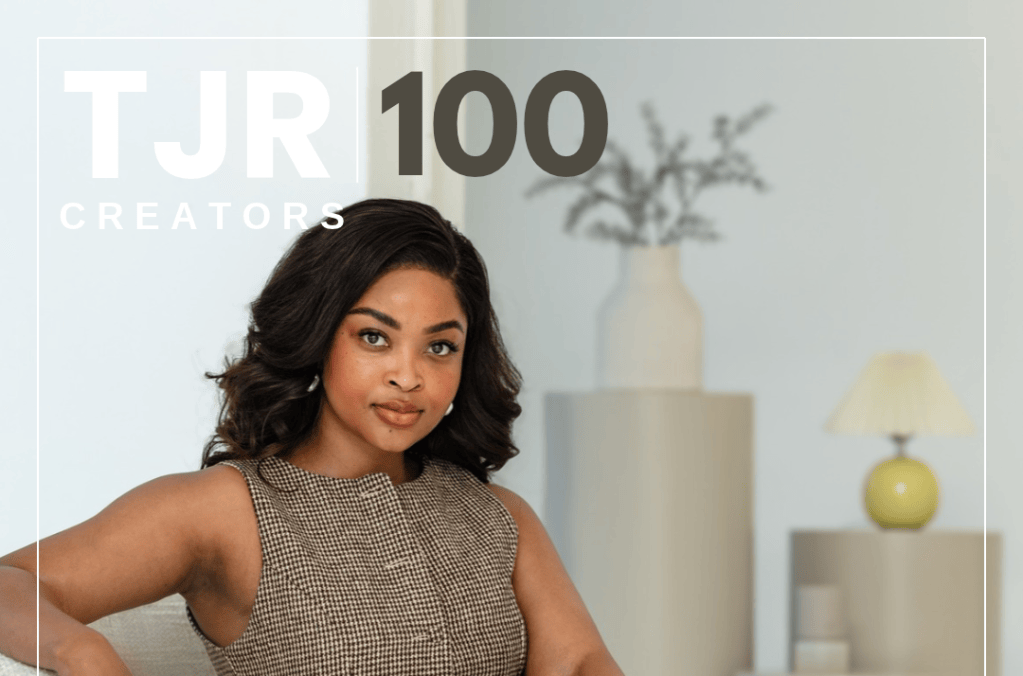
Long before content creation became the lucrative industry it is today, Dr Nosipho Mhlanga was already finding her voice on YouTube.
A decade later, that early curiosity has evolved alongside a career in medicine, giving her a unique space to occupy: one where clinical knowledge meets lifestyle, wellness, beauty and the everyday experiences that make us human.
Six years into practising medicine, including working within South Africa’s public healthcare system, Dr Mhlanga has gained a deeper appreciation for the responsibilities that come with caring for people.
Across her digital platforms, she embraces the many dimensions of womanhood, sharing everything from health education to fitness, beauty and personal reflections.
As part of TJR 100 Creators, we speak to Dr Nosipho Mhlanga about medicine, navigating the digital space, responsible influence and the importance of allowing yourself to become more than one thing.
You have been practising medicine for six years. What are some of the biggest lessons the profession has taught you?
Medicine has taught me humility, resilience, compassion and the importance of never assuming that you know everything. You quickly realise that knowing science is only one part of being a good doctor. Understanding people, their circumstances and the experiences that influence their health is equally important.
Working in the South African public healthcare system has exposed me to very different realities and given me a deeper appreciation for the things we often take for granted. It has taught me to be resourceful, to advocate for my patients and to recognise how much there is still to be done to improve our healthcare system.
On a personal level, medicine has also taught me the importance of extending the same compassion I have for my patients to myself. Being a doctor is a demanding profession, and I’ve had to learn that being passionate about caring for others doesn’t mean neglecting my own physical and mental wellbeing. I’m still learning how to strike that balance.
Going through your Instagram, one gets the sense that you’ve always been intentional and comfortable with social media. How did you manage to stay relevant while maintaining a demanding career?
I think authenticity and allowing myself to evolve have played a significant role in that. I’ve never felt the need to fit into one particular niche simply because I’m a doctor. I’m a multifaceted woman with interests in beauty, lifestyle, fitness, wellness and so much more, and I enjoy having a space where I can express all those different aspects of myself.
Some of my content is educational, while some of it is simply about sharing my experiences, products I genuinely love and use, or things that bring me joy. Not everything needs to have a profound message behind it.
Balancing medicine and content creation isn’t always easy, and there are definitely periods when I have more capacity to create than others. However, I think the fact that I genuinely enjoy creating has made it easier to sustain over the years.
Staying relevant, for me, has been less about keeping up with every trend and more about remaining authentic, sharing what genuinely interests me and allowing my audience to grow with me.
Your YouTube channel dates back at least a decade, which means you were creating content long before YouTube tutorials and educational content became as mainstream as they are today. You’ve also had periods away from the platform, and now seem to be finding your way back. What has that journey been like, and how has your relationship with content creation evolved over the years?
I’ve always had a creative side, and content creation gave me an outlet to explore that long before it became the industry it is today. I started because I genuinely enjoyed creating, sharing my interests and connecting with people. There wasn’t necessarily a grand strategy behind it.
Over the years, my priorities have naturally shifted as my career and personal life have evolved.
There have been periods when medicine required more of my time and energy, and I’ve learnt to give myself permission to step away without feeling that I’ve failed or lost something.
Today, I appreciate that content creation can serve many different purposes. I can use my medical background to educate and advocate, but I can also share a beauty product I’m excited about, document my lifestyle, share my personal experiences or create something purely because I enjoy it.
I think one of the greatest privileges of having created content for so long is having a community of people who have witnessed different versions of me and grown alongside me. Returning to YouTube is also an opportunity to reconnect with the creative side of myself that initially drew me to content creation, without putting too much pressure on what that needs to look like.
When it comes to brand partnerships and endorsements, how do you approach the opportunities that come your way?
Authenticity is incredibly important to me. I gravitate towards brands and products that align with my lifestyle, interests and values, and that I can genuinely see myself using or recommending.
My partnerships aren’t limited to healthcare. I enjoy working with beauty, skincare, lifestyle and wellness brands because these are things I’m genuinely interested in outside of my profession.
There’s something particularly exciting about getting the opportunity to work with a brand whose products you’ve already been using and loving independently. Of course, when a campaign involves health or medical messaging, there is an additional layer of professional and ethical responsibility. I’m particularly mindful of ensuring that the information I communicate is accurate, evidence-based and responsible.
I’ve also learnt that not every opportunity is necessarily the right opportunity for me. Sometimes that means turning down financially attractive partnerships because they don’t align with who I am or what I believe in. Ultimately, I want my partnerships to feel like a natural extension of who I am and what I already enjoy sharing. The trust I’ve built with my audience over the years is something I value deeply and never want to compromise.
Outside of medicine and your social media presence, who is Nosipho Mhlanga at her core? What are the things that bring you joy and make you who you are?
I think who I am is constantly evolving, shaped by the people I encounter, the experiences I have and the lessons I learn along the way. At my core, I’m someone who loves deeply, values meaningful connections and is intentional about personal growth.
My greatest joy comes from spending time with my family and friends and doing things that genuinely pour back into me. Fitness is a big part of that. Going to the gym has become more than just looking after my physical health; it’s something I do for myself, a space where I can recharge, clear my mind and reconnect with myself.
Having experienced a significant loss recently has also shifted my perspective on life. It has reminded me of how precious and fleeting our time on earth really is, and how important it is to be present, to express love openly and to give as much of myself as I can to the people I love while I still have the privilege of doing so.
As ambitious as I am, and as much as I value my professional accomplishments, I want to live a life that is rich in love, meaningful experiences and genuine connections. I want to become the best version of myself, not only for my own fulfillment but also for the people who matter most to me.
Is there a particular speciality within medicine that you’re passionate about? Do you see yourself pursuing specialisation?
Interestingly, when I first started out in medicine, I wanted to become a trauma surgeon. Without getting into everything that influenced the change in that aspiration, my journey through medicine has certainly reshaped my interests and my understanding of where I would like to make an impact.
I now have a very keen interest in mental health, women’s health and public health. Both mental health and women’s health are areas that I feel remain underserved, and some of my own personal experiences have further strengthened my passion for advocacy within these spaces.
Working in primary healthcare has also made me increasingly interested in the broader functioning of our healthcare system. Seeing the challenges that both patients and healthcare professionals face daily has made me passionate about improving how our facilities operate and how healthcare services are delivered within our communities.
My ambitions within medicine look quite different from what they did when I first started, and I’ve come to appreciate that it’s okay for those ambitions to evolve. I would love to further my studies, particularly in public health, and explore opportunities that would allow me to contribute to meaningful change that can impact people on a larger scale.
As someone who practises medicine while also using digital platforms to educate and engage the public, what is one health conversation you believe deserves far more attention in South Africa?
Preventative healthcare and health literacy. We tend to have a very reactive approach to healthcare, where people often only seek medical attention once they are symptomatic or their condition has progressed. We need to invest more in equipping people with the knowledge and resources to protect their health before they become unwell.
Whether we’re discussing HIV prevention, cervical cancer screening, reproductive health, mental health or non-communicable diseases, there is still a significant gap between the healthcare interventions available and what people actually know about them.
These conversations must also acknowledge the socioeconomic barriers that prevent people from accessing healthcare. Education alone is not enough if people cannot access the services they need. I believe that healthcare professionals have an important role to play in bridging that gap, and digital platforms present an incredible opportunity to democratise access to health information.
Quick-fire Qs
The one health habit everyone should adopt?
Regular physical activity. Beyond the physical health benefits, I think people underestimate how much movement can positively influence their mental wellbeing and overall quality of life.
A medical drama or series you actually enjoy watching?
Law & Order: Special Victims Unit. Not quite a medical drama, but I love a good crime and investigative series.
Your biggest pet peeve as a doctor?
Medical misinformation, particularly when it is confidently disseminated online and discourages people from accessing appropriate healthcare. It’s incredibly frustrating because, as doctors, we’re often the ones who have to manage the very real consequences of that misinformation.
One thing people would be surprised to learn about you?
Despite having quite a public presence on social media, I really enjoy my solitude. I genuinely value having time to myself, being in my own space and not always having to be socially available.
If you weren’t a doctor, what would you be?
Definitely a TV presenter! As a child, I used to dream of entering those TV presenter search competitions. I’ve always loved being in front of the camera, expressing myself and connecting with people. It’s quite funny how life works out because, in a way, content creation has allowed me to fulfil a little bit of that childhood dream alongside my career in medicine.
Your current favourite way to unwind?
Going to the gym, followed by some uninterrupted time at home watching a good series.
Who do you want us to feature next? Nominate them here!


Leave a Reply