If you missed part 1, click here…
What future is being constructed for the youth of South Africa, and who is shaping it?
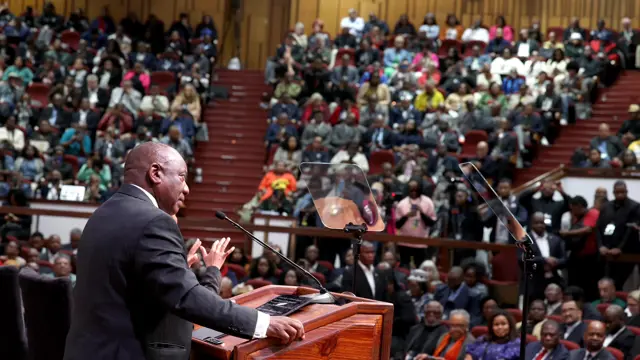
This is where the National Dialogue assumes historic significance! But the Dialogue will only be as meaningful as the extent to which it is claimed and shaped by the people themselves, and in particular by the youth.
Young people can neither afford to be passive observers in a process that will define the trajectory of their lives for decades to come, nor outsource their agency to elites, institutions, or established actors whose failures have, in part, produced the present crisis.
The moment demands something different. It demands organised, conscious, and purposeful youth participation. To make hay while the sun shines in this context is not a poetic abstraction.
It is a political imperative – a generational call to action! It requires that young people organise themselves into structured platforms of engagement, capable of both articulating their lived realities and advancing concrete proposals for change.
It requires the building of youth formations across campuses, communities, workplaces, and digital spaces, rooted in dialogue, deliberation, and collective action. At the core of this generational undertaking is the establishment of Youth Cells across sectors and localities.
These cells must serve as the primary sites of engagement, where young people convene regularly in campus forums, community town halls, and sectoral discussions to interrogate the key challenges facing the country.
These are not to be symbolic gatherings, but structured platforms guided by clear thematic priorities such as unemployment, education, governance, inequality, technological innovation and social cohesion.
These dialogues must be accompanied by capacity-building initiatives, equipping young people with the skills required to facilitate discussions, document outcomes, and translate lived experiences into coherent policy proposals.
Through platforms such as podcasts, live streaming and social media content, these conversations can be amplified, connected, and sustained across geographic and social divides. At a higher level, the establishment of a National Youth Coordinating Committee becomes critical.
This structure must synthesise inputs from local and sectoral youth cells, consolidate them into a unified youth perspective, and ensure that these contributions meaningfully shape the broader National Dialogue process.
Equally important is the principle of accountability and feedback. The outcomes of the National Dialogue must not disappear into elite processes.
They must be returned to the youth constituencies from which they emerged, through community meetings, digital platforms, and public engagements, ensuring that participation translates into ownership. Ultimately, the success of this process will depend on whether young people recognise the historical weight of the moment.
The first phase of democracy opened a window of possibility that was not fully realised. The second phase has demonstrated how quickly progress can be reversed when institutions weaken and leadership falters. The present moment offers a new, albeit fragile, opening. The question is whether the youth will seize it.
The National Dialogue is a call to South Africa’s youth away from drug abuse, alcohol abuse, violence, crime, misdirection, despondency, and hopelessness, to engage in a generational opportunity of imagining the Country they want and the one they do not want. Writing in the Book of Proverbs, King Solomon reminds us: “Make hay while the sun shines…”
For the youth of South Africa, that sun is not guaranteed to shine indefinitely. But while it does, the responsibility is clear:
- To organise!
- To participate!
- To lead!
And to shape the future that history once promised but has yet to fully deliver! To make hay and intentionally labour toward realising the dream deferred!
Kefentse Mkhari Power 98.7 Broadcaster and Socioeconomic Justice Activist



Leave a Reply