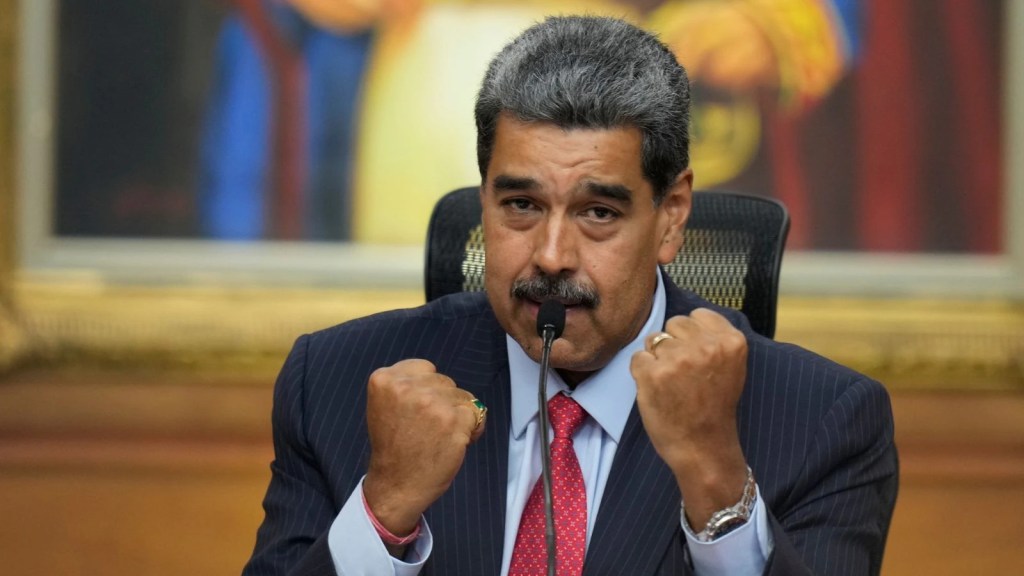
Political Epilogue: When Power Forgets the Law
There is a proverb from the Global South that the powerful prefer to forget:
“When elephants fight, it is the grass that suffers.”
- Venezuela is not an elephant.
- Nor was Iraq.
- Nor Libya.
- Nor Nigeria’s Delta.
They are the grasslands upon which great powers rehearse their moral arguments and test the elasticity of international law. The international order now stands at an inflection point where force no longer announces itself with boots and bombs alone. It arrives in subpoenas, sanctions schedules, maritime advisories, arrest warrants without jurisdiction, and whispered assurances that this time the violation of sovereignty is “necessary.”
Were the arrest or forcible transfer of a sitting head of state, or their spouse, to occur outside a lawful international mandate, it would represent not justice but the final collapse of the post-1945 promise that sovereignty is not conditional upon obedience.
International Law and the Post-1945 Promise
Article 2 of the United Nations Charter is unambiguous:
- Article 2(4) prohibits “the threat or use of force against the territorial integrity or political independence of any state.”
- Article 2(7) expressly forbids intervention “in matters which are essentially within the domestic jurisdiction of any state.”
These provisions were not drafted for convenience. They were drafted after ruins, after graves, after empires. To erode them now, selectively and strategically, is to return the world to a pre-charter condition where might masquerades as mandate and legality is retrofitted post facto.
Venezuela’s Sin Is Not Tyranny — It Is Defiance of the System
Let us dispense with the theatre.
- Nicolás Maduro is authoritarian.
- His elections are contested.
- His governance is brutal.
But brutality alone has never triggered global crusades. What makes Venezuela intolerable is not despotism — the world is replete with tolerated despots — but disobedience to the architecture of control.
Venezuela holds over 300 billion barrels of proven oil reserves, the largest on earth (OPEC; U.S. Energy Information Administration). Yet oil abundance has never been the casus belli.
The real rupture occurred when Venezuela, under escalating sanctions, systematically exited dollar-centric trade, embracing oil-for-debt structures, barter arrangements, and non-Western settlement channels, principally with China.
This was not economic desperation. It was jurisdictional rebellion
In doing so, Venezuela challenged not markets, but monetary sovereignty as enforced by empire.
Oil Is the Bloodstream, Settlement Is the Heart
The Fight Is for Circulation, Not Commodities
Empires do not fight for commodities.
They fight for control over circulation.
Modern sanctions regimes no longer target flags or anthems. They target plumbing:
• Shipping insurers governed by Anglo-American law
• Clearing banks dependent on SWIFT and dollar liquidity
• Ports subject to OECD compliance regimes
• Refiners reliant on Western certification
This is not diplomacy. It is extraterritorial administrative domination.
When oil cannot be insured, cleared, or settled, it may as well not exist. Control the system, and the resource becomes hostage to permission.
This is why China’s role is pivotal.
China did not invade Venezuela, Iran, or Iraq. China kept the lights on when the exits were closed.
Through long-term off-take agreements, debt-backed supply contracts, shadow shipping networks, and alternative insurance pools, China became the counter-system, the emergency oxygen for sanctioned states.
Iran now exports approximately 1.4 – 1.6million barrels per day, largely to China, at discounted rates. Venezuela exports 700,000 – 900,000 barrels per day, much of it flowing east through opaque intermediaries.
This is not energy trade. It is geopolitical life support.
Africa Knows This Script: Libya and Nigeria as Precedent
Africa has lived through this pattern long before it was theorised.
Libya, with 48 billion barrels of proven reserves, fell not merely because of humanitarian concern. Muammar Gaddafi’s fatal heresy was his advocacy for African monetary autonomy including non-dollar trade and a proposed gold-backed dinar.
What followed was not stability, but fragmentation, arms proliferation, and a failed state whose collapse still destabilises the Sahel.
Nigeria, Africa’s largest oil producer with over 37 billion barrels, offers the quieter version of control: chronic insecurity in the Niger Delta, enforced liberalisation, and perpetual “reform” conditioned on external approval.
Control need not arrive through invasion. Sometimes it arrives through conditionality dressed as assistance.
The Myth of Exclusive Justice
Uncle Sam’s High Horse and the Myth of Exclusive Justice.
The United States must confront an uncomfortable truth.
It is not the world’s confessor, redeemer, or sin-eater.
History records a grim catalogue:
- Saddam Hussein toppled, then retroactively tried to justify an unlawful war.
- Libya “liberated” into chaos.
- Governments destabilised, then legally rationalised after the rubble cooled.
As Justice Robert Jackson warned at Nuremberg:
“If certain acts of violation of treaties are crimes, they are crimes whether the United States does them or whether Germany does them.”
Justice cannot be monopolised.
Legality cannot be selective.
What the International Community Must Do
The United Nations Security Council , for all its structural inequities and veto-driven paralysis, must reclaim its foundational purpose:
• Reassert Article 2 of the UN Charter without exception.
• Reject unilateral enforcement disguised as moral necessity.
• Insist that accountability flows through multilateral legal processes, not ad hoc coercion.
• Protect sovereignty not as endorsement of regimes, but as protection of peoples.
The international community must remember:
- Sovereignty is not a reward for good behaviour.
- It is a shield against chaos.
The Real Prize Was Always the System
Oil was never the prize.
The prize was always:
• currency dominance,
• settlement authority,
• control over global cashflow.
Oil is merely the bloodstream.
The real struggle is for the heart.
Systems, Not Ideology. Power Migration and Empire’s Choice
The wealthy do not argue ideology. They interrogate systems. Because when systems shift, power migrates. And when power migrates, empires are forced to choose:
law , or force dressed as law. Venezuela is not the end of the story. It is the mirror.





Leave a Reply