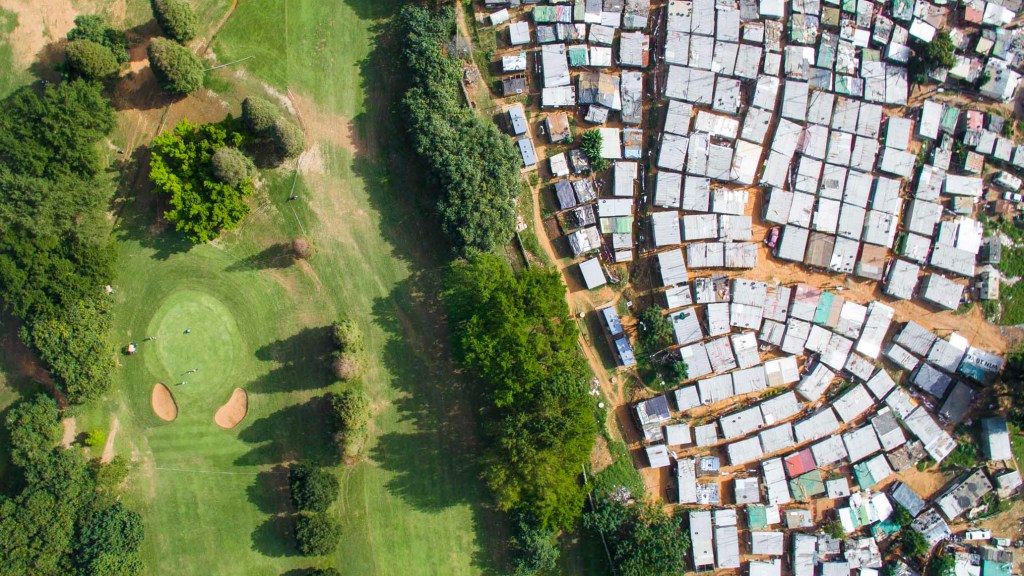
A series of official inquiries have been initiated this year, from the “Madlanga Commission”, The Judicial Commission of Inquiry into Criminality, Political Interference and Corruption in the Criminal Justice System, to the Parliamentary Ad Hoc Committee concerning Lieutenant General Nhlanhla Mkhwanazi et al – reveal a consistent truth.
The inability of South Africa to function as a high functioning society is not caused by the poor, illiterate, or marginalised. Rather, the primary cause lies with the opposite group: the rich, powerful, and educated who control the state and commerce.
As economists Daron Acemoglu and James Robinson argue in Why Nations Fail, “Poor countries are poor because those who have power make choices that create poverty. They get it wrong not by mistake or ignorance but on purpose.”
This assertion holds significant truth in the South African context. Public policy, which dictates action and resource allocation, is the prerogative of the state and those with direct influence on state functionaries, the elite class. While this influence is presumed to belong to the electorate, evidence from these commissions proves grossly otherwise.
The average voter, as a collective, does not coerce senior public officials into joining nor assisting criminal networks that undermine the law of the land. Through electoral participation, the electorate makes its expectations transparent: it demands professional ethical conduct from leaders and clear, complementary relationships with power players in all pockets of society.
Yet, developments consistently contradict the interests of the dominant demographic and electoral groups—Africans in terms of race and women in terms of gender. These groups continue to struggle with access to the economy, education, and equality, remaining vulnerable to economic shocks and inadequate services meant to add value to their lives.
Their influence is minimal and insignificant; they are innocent from capturing public policy or officials. The power they yield through periodic public participation is insufficient to shape South Africa into a high-functioning society as per their electoral demand and manifesto support.
A high-functioning society can be loosely defined as one that satisfies the following elements:
- Meets the basic needs of its people.
- Is led by strong, reliable leaders and has effective governance.
- Maintains economic stability and the rule of law.
- Fosters inclusive social cohesion, active and responsible citizenship.
The opposite is a weakening state, characterised by lawlessness and social decay. If the testimonies from these active commissions are a true reflection of reality, then our society is in grave danger—a danger caused by the ruling elite.
This failure is not confined to law enforcement, judiciary, or the political establishment and ecosystem. The marginalised vote for access to higher education and identity affirmation, and the elite councils and university executives who some maybe African by race, are neo-liberal by orientation, refuse, leading to student revolts.
They request living wages, and the owners of production and their buffer captain’s elite refuse, sparking labour unrest. They demand basic services, and the political – and service provider elite refuse, causing community protests. The story repeats itself in all sectors: those with power either neglect to use it for the public good or actively abuse it, stalling nation and state building at every turn while their elite status enables them to escape reality.
Public institutions and servants have a legal obligation and social contracted mandate to create social benefits and value that improve lives. Their duty is to serve the majority and uplift the marginalised. It is therefore a profound betrayal when they collaborate with the elite, unelected individuals, to do the opposite, devalue and compromise the state.
Ultimately, these commissions and inquiries are merely reactionary measures. They are established by the same elite in an effort to rectify their own transgressions. The goal is not only to retain the confidence of the masses that put and keep them in power but, more importantly, to divert attention from the central fact: the failure to achieve a high-functioning society is a direct consequence of the elite’s actions—the political, business, and academic leaders who directly manage or influence the state. Its ‘elite failure’.
Its failure of those that sit around tables at Hyde Park Corner, Khayalami Corner, Waterfall Corner and other corners and other upmarket areas in and outside the country to decide the trajectory of the country dressed Italian, driving German and smoking Cubans; those that do not seem to understand that what they want, a “soft life”, is the same interest the poorest of the poor want too; and those that have inferior understanding to social concepts such as ‘patriotism’, in theory and in practice.
It’s important to capture this moment and characterise accordingly as, “ELITE FAILURE” that makes it impossible for South Africa to be a High Functioning Society!



 The Joburg Reporter
Leave a reply to Sovereignty vs Proxy: Venezuela and the Global South’s Unfinished Struggle for Self-Rule – The Joburg Reporter Cancel reply