South Africa has a vulnerable energy sector in general, crude oil and petroleum products more specifically.
This, as a consequence of significant dependence on foreign supply markets, imports – which are exposed to demand and supply determinants such as geopolitical instability as what is currently experienced from the Israel – USA, 28 – February – 2026, initiated war on Iran.
This war has resulted in the destruction of oil and petroleum infrastructure, and limited shipping navigation at the Strait of Hormuz, responsible for 20.9% of global supply, and probably soon the Strait of Bab el – Mandeb (“The Gate of Tears”) responsible for 4.1% of total global volumes.
It’s a common occurrence that mainstream analysts would solely focus on crude oil supply shocks with limited detail and context – isolated logic is commonly correct and undisputable but doesn’t provide a comprehensive picture important for decision making by households.
In 2023 South Africa imported 13.2 billion litres of crude oil, estimated at 138 000 barrels per day; during the same period, 19 billion litres of refined fuel products: Diesel (67%), Petrol (23%), Liquefied petroleum gas (5%), Jet fuel (4%) and Illuminating paraffin (2%), this as a consequence of lost domestic refinery capacity over the past several years (South African Department of Mineral Resources and Energy South African Energy Trade Report 2023 and 2024; and South African Revenue Service petroleum trade statistics; and US Energy Information Administration, Country Analysis Brief: South Africa)
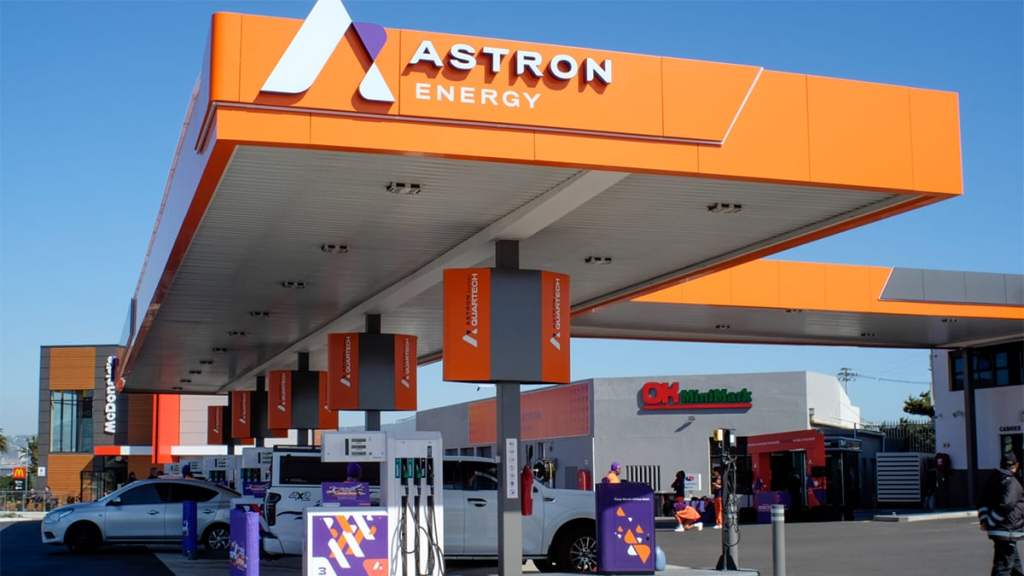
According to the US Energy Information Administration (2025), South Africa only refined twenty percent of the petrol it consumed – that would have been refined from the handful of refineries being: Astron; Engen; Natref; PetroSA; Sapref; and Secunda refinery.
This implies that it’s not solely the crude oil citizens must be worried about, but actual finished petroleum products because South Africa, like most typical African states, believes in foreign refined goods and not in building domestic capacity.
Crude Oil – Import
| Country | Litres (In Millions) | Percentage (%) |
| Nigeria | 966 | 30 |
| Angola | 726 | 22 |
| United States | 394 | 12 |
| Saudi Arabia | 363 | 11 |
| UAE | 253 | 8 |
| Brazil | 237 | 3.5 |
| Turkey | 233 | 3.5 |
(South African Energy Preliminary Trade Report 2025)
The Crude Oil – Import table for 2025, important to note as supplier vary by quantity and actual supplier from time to time, demonstrates that the gulf supplied almost 20% of our crude.
Petroleum Product – Import
| Petroleum Product | Trade Share% | Litres |
| Petrol | 21 | 1.1 billion litres |
| Diesel | 65 | 3.3 billion litres |
| Jet A1 | 3 | 177 million litres |
| IP | 2 | 120 million litres |
| LPG | 8 | 411 million litres |
(South African Energy Preliminary Trade Report 2025)
The Petroleum Product – Import table shows that the distribution of imports per product with diesel and petrol a combined 86% – the two fuels most needed to operate the South African economy.
Petroleum Products Suppliers
| Country | Petrol | Diesel | Jet A1 | IP | LPG |
| Bahrain | 9% | 6% | |||
| India | 24% | 15% | |||
| Italy | 11% | ||||
| Kuwait | 12% | ||||
| Oman | 45% | 12% | |||
| Saudi Arabia | 43% | 8% | 35% | ||
| UAE | 19% | 7% | 48% | ||
| USA | 57% |
(South African Energy Preliminary Trade Report 2025)
The table doesn’t capture the complete supplier list, information available from the South African Revenue Service (SARS) and other credible sources however, what we have Is adequate to make an argument – Gulf states supply over 60% of South Africa’s petrol and diesel.
Even if South Africa were to build in strategic risk strategies to mitigate against crude oil supply shock, it would still experience such a shock now.
This could be achieved through import diversification, which is a common strategy. Yet, it still needs the refinery infrastructure and capacity of Gulf states.
It must pass through the Strait of Hormuz safely, which Iran has committed to for friendly nations. Economically, shipment costs have been adjusted upwards due to the existing volatility. These costs will definitely be passed on to consumers, impacting South African citizens through price transmission.
Two challenges exist for South Africa right now – gulf crude oil supply and gulf refinery capacity, both depended on infrastructure integrity and production operating undisturbed.
Even if South Africa were to miraculously expand refinery capacity, it would still need crude oil. Supply has increased from an average $70 per barrel before the war to an average of $110 right now. We are not appraised regarding current supply numbers of barrels.
Refinery will reduce petrol and diesel prices but crude oil supply being inadequate will undermine those gains simultaneously.
Those two variables and how they correlate is silent from the articulation from those in power as they issue statements that residents must not panic.
Although unrelated – South Africans are justified to panic. Not only is energy inflationary and might cause the South African Reserve Bank (SARB) to punish residents with inflation, a movie we’ve watched before, price gouging and sticky prices are a crisis in South Africa, one the Department of Trade Industry and Competition struggles to subdue – remember prices of certain items during covid, such as ginger. Sticky prices are commonly felt by the poor: when fuel costs go up and later down, taxi fares hardly ever decrease.
Let’s hope this war will end soon but importantly South Africa must find sustainable solutions to its energy needs as a matter of domestic economic, social and political security and stability. The powers that be must also provide citizens with full truths from these part truths about the magnitude of the current crises brought by the Israel – USA war on Iran.



 The Joburg Reporter
Leave a comment