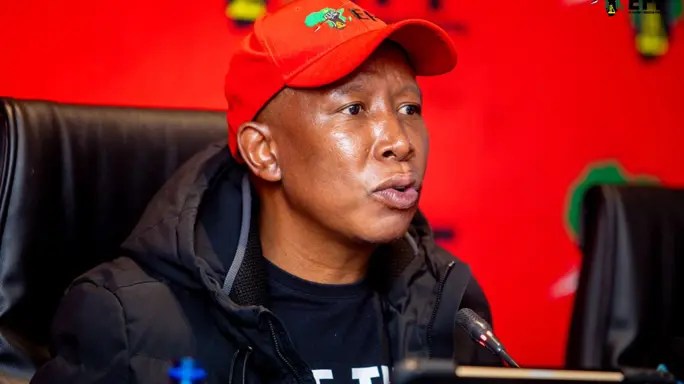
The 12th anniversary of the EFF marks a significant milestone in the lifespan of its political existence in South Africa’s body politic.
The party was founded on radical political philosophies and thus, embraced Fanonism, Pan-Africanism, Marxism and Leninism in the main. Since its formation 12 years ago, the party brought about robustness, radicalism, and progressive politics in the political landscape of the country, both within government and outside government.
It has positioned itself as the vanguard of the
economically excluded, marginalised and landless people.
The party has largely appealed to the broad sector of the population comprising the working class, student populace, middle class, rural and township communities. This was evident in its electoral success demonstrated by its party support garnered in the 2014 national elections and recorded a 6.4% that translated into securing about 25 parliamentary seats.
This was a phenomenal achievement. The party assumed the status of being the third biggest party in Parliament.
In the 2016 Local Government Elections, the representation of the party exceptionally grew in municipal councils, chief among these, included its kingmaker status it enjoyed in shaping and influencing municipal coalitions
governments especially in the metros of Johannesburg, Tshwane, and Nelson Mandela Bay, bearing in mind that, the party contested the elections for the first time.
At the same time, the party registered electoral growth of 11% in the 2019 national elections having obtained about 1.8 million votes moving from a base of the 6.4% it recorded in the 2014 national elections as intimated earlier.
Outside formal parliamentary and legislature’s politics, the EFF has on numerous occasions addressed the plight of the masses by embarking on political campaigns with the view to express its ideological stance on variety of issues, notably, the insourcing of workers, nationalisation of mines, amendment of section 25 of the Constitution imposing expropriation of land without compensation, introduction of compulsory early childhood
education among others.
Suffice it to say that some of these political campaigns waged by the party have found expression in government policies in the last decade including the landmark constitutional court case it won against the National Assembly in failing to hold former President Zuma accountable.
In terms of its policy position on Foreign Policy, for example, the party continues to articulate its stance on the Palestinian question and is calling for the self determination of the Palestinian citizens as part of resolving the
Israel/Palestine political conflict and war and this includes its allegiance to countries of the Global South. This accords with its ideological posture on geo-politics.
What does the future hold for the Party?
The political terrain has drastically changed for the party borne out of the electoral decline it experienced in the 2024 national elections. This was an unprecedented political moment for the party since its debut in electoral politics in 2024.
The EFF has until recently experienced exodus of some of its former founding members and leaders who were prominent within the
ranks of the party.
These developments require the party to contemplate repositioning itself as part of navigating the new political terrain characterised by the formation of a Government of National Unity, new political formations such as the MKP, Rise Mzansi, Build One South Africa, and the appetite of the South African Communist Party willing to enter electoral politics in the upcoming Local Government Elections and beyond.
Part of repositioning itself is the need for the party to encourage internal debate, dissent, and transparent and competitive political contestation of party positions in its top six, and the Central Command Team.
These democratic practices are essential for the survival, growth, and resilience of any political party in modern day politics.
Professor Sam Koma is a Governance Analyst and Expert


 The Joburg Reporter
Leave a comment